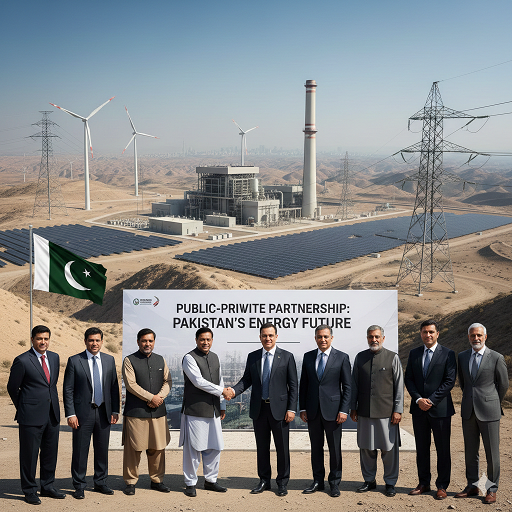
Dr. Muhammad Rehman (Policy Analyst)
Public-Private Partnership (PPP) serves as a modern procurement tool for infrastructure development project and government widely consider it an important governance tool for the socio-economic development of any country. In short, PPP refers to a long-term contractual agreement between government and private entities for developing, financing, operating and maintain public infrastructure or service delivery. PPP agreements also determine sanctions and risk allocation mechanism within the contract that is true spirt of contractual agreements. PPP mechanism help government to reduce financial burden, share risk, improve efficiency and utilize private sector resources.
Participatory Governance
PPP is a vital branch of participatory governance (PG). Participatory governance reduces the manipulation of a single stakeholder (government) and involves multiple stakeholders together for the improvement of infrastructural development and service delivery mechanisms. Multiple stakeholders involve lenders, the private sector entities, local and international funders, supranational institutions and governments bodies. PPP is also recognized through various terminologies , including PPP, 3Ps, Private Finance Initiative (PFI) and Public and Private Sector collaboration.

In the 1980s, policymakers introduced the PPP concept utilize private sector expertise and resources for the provision of public services in collaboration with government entities. Governments have used the PPP mechanism in various sectors, including roads, power generation, education, ports and the health sector. Both developing and developed countries have adopted this business approach to enhance efficiency, improve service delivery mechanism and make effective use of private sector capacity.
PPP Models
PPPs operate through various contractual models such as BOO (Build-Operate-Operation), BOT (Build-Operate-Transfer), BOOT (Build-Operate-Operation-Transfer), ROT (Rehabilitate-Operation-Transfer), DBFO (Design-Build-Finance- Operate), Lease and Contract Management (CM). Each model differs based on how responsibilities are shared, and risk allocation mechanism depends on the specific contractual agreement between the government and private sector entities.
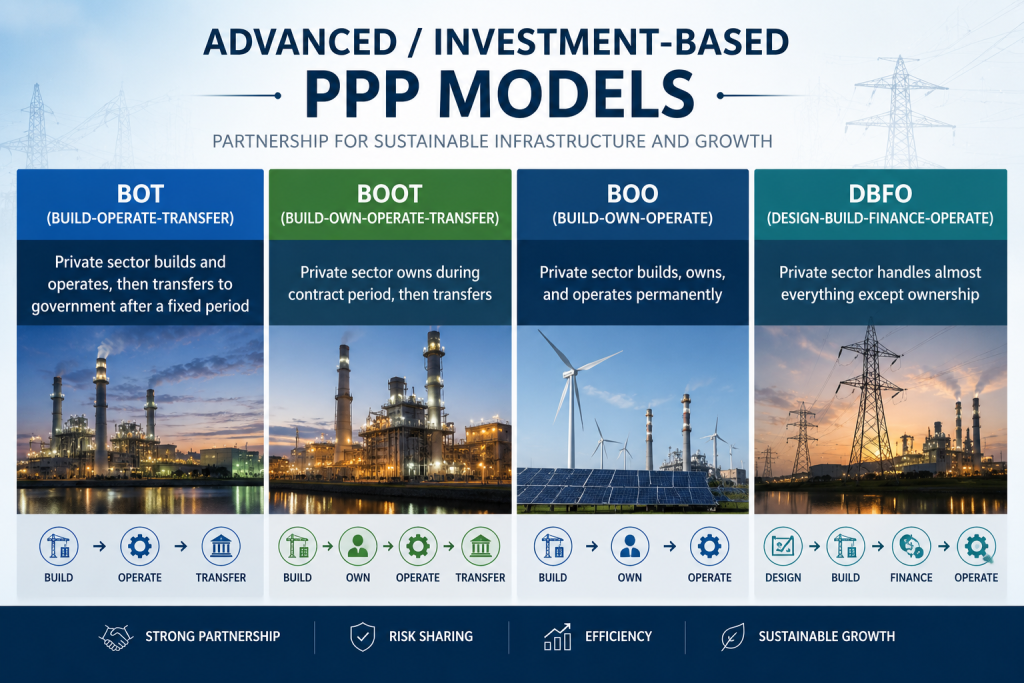
PPP Mechanism Based on the Contractual Agreements
These PPP contracts are based on long-term contractual agreements, usually ranging from twenty-five to thirty years. These contractual agreement design to create mutual benefit a win-win situation for both parties. PPP contractual agreements develop a Principal-Agent relationship between the government and the private sector. Government organizations perform their duty as a principle, responsible for oversight monitor the activities and facilitate, while private sector acts as the agent organizations. Whereas an agent organization perform its duty on behalf of the principal organization and improves the service delivery mechanism.
A contractual agreement between a public and a private organization develops legal binding obligations for both sides. If either party fails to complete the assigned task within the agreed timeframe or does not meet the required performance standards, sanctions can imposed. One of the most important components in the contractual agreement is risk allocation mechanism. Who will bear the risk if the project is not able to accomplish its goals? This risk allocation mechanism is highly based on the PPP models. PPP models define the mechanism of risk allocation.
PPP Models Used in the Power Generation Sector
In the energy sector, most commonly used BOO and BOOT models. The BOO is typically used for fossil fuels projects, while the BOOT for Hydropower projects. When these models operate in the power generation sector, the government provides incentives and sovereign guarantees to the private sector instead of investing direct investment in the project. Under these model agreements, private sector is responsible for designing, building, financing, operating and maintaining the project during the agreed contract period. Public sector incentives include capacity charges, exemption from various taxes such as import duties and export duties, income taxes etc. In the power generation sector, private sector companies operating under these arrangements are known as Independent Power Producers (IPPs).
Policies to Attract Private Investment in Pakistan
In Pakistan, Private Power Infrastructure Board (PPIB) has commissioned 43 IPPs with a combined power generation capacity of around 17,550 MW. Additionally, I8 projects are in the pipeline, expected to add approximately 11,000 MW of electricity. According to Asian development (2021), about 24.7 billion dollars invested private sector in the power generation sector. Since the 1990s, Government of Pakistan (GoP) has introduced multiple policies to attract private sector investment in the power generation sector. The first power generation policy introduced in 1994 and subsequently introduced additional policies in 1995, 1998 2002, 2006, 2013, 2015 and 2019. In addition, the government introduced the two-transmission line policies in 1994 and 2015. The GoP introduced it first PPP policy in 2010 and followed by the enactment of the PPP Act in 2017. A further PPP amendment act introduced in 2021 to strengthen the regulatory framework and implementation process.
The PPP mechanism was first introduced in Pakistan in1994, while the formal PPP policy was introduced in 2010. This 16-years gap between the implementation of PPP projects (from 1994) and the formal adoption of a comprehensive PPP policy in 2010 created multiple challenges and gaps within the overall PPP framework. As a result, Pakistan now faces a situation where double power generation capacity as compared to actual demand. This has led to “capacity payment trap” that reached to 2.1 trillion rupees by the end of 2025.
Disclaimer
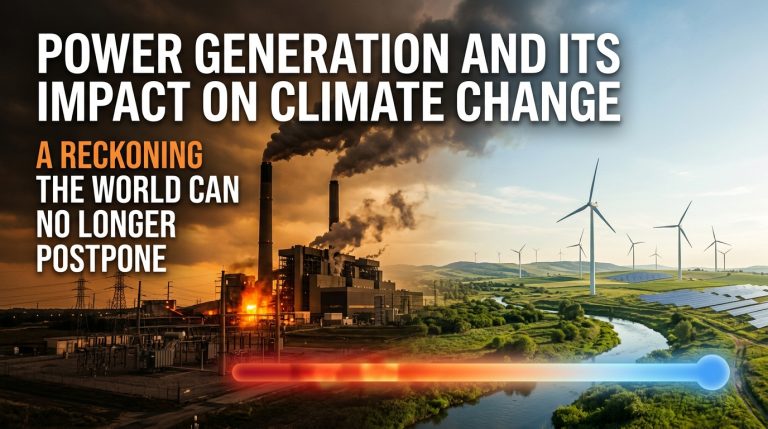
We use artificial intelligence (AI) tools to generate some images on this website for illustrative purposes. Although we strive for accuracy and realism, these images may not represent real people, events, or locations. We use them only to support the content and enhance visual understanding.
About the Author


what a great blog! very informative and detailed.
One of the most reliable author I’ve seen so far in Pakistan.
This is a well-researched and insightful discussion on the role of Public-Private Partnerships in Pakistan’s power generation sector. The article effectively highlights how collaboration between the government and private investors can help address energy , improve efficiency, and attract much-needed investment. The analysis of challenges and opportunities provides a balanced perspective, making the topic both informative and relevant to Pakistan’s current energy needs. Excellent work in presenting a complex issue in a clear and engaging manner.