Economic Crisis & Energy
Dr. Muhammad Rehman (Policy Analyst)
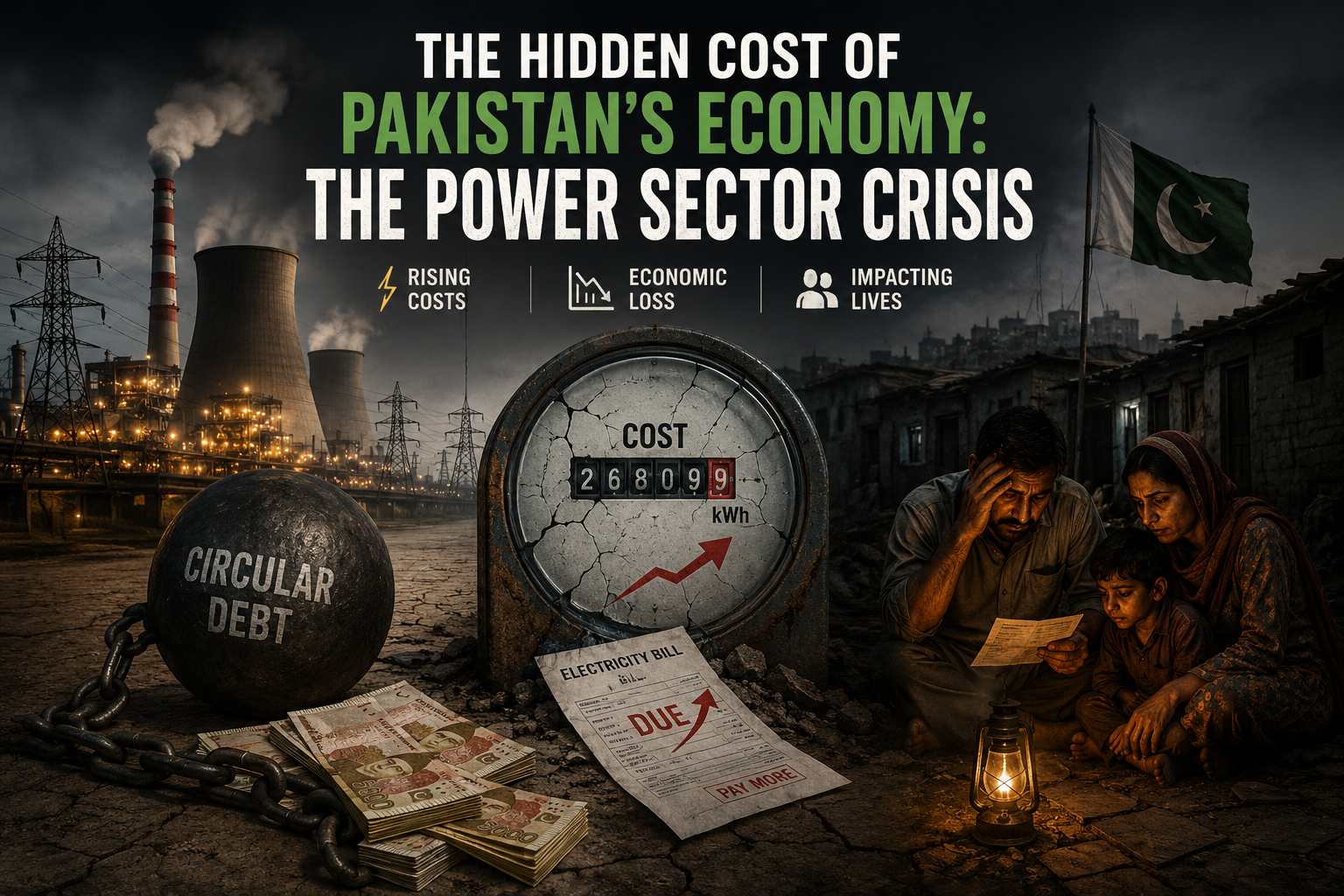
Pakistan’s power sector stands at a critical stage and has become one of the most significant challenges facing the national economy. Rather than serving as an engine of economic growth and socio-economic development, the power sector has become a chronic financial burden and placing unbearable pressure on the national economy. The power sector faces a range of persistent challenges that continue to hinder its growth and long-term sustainability. Power sector challenges include weakness in the regulatory framework, issues in determining tariffs, increasing circular debt, rising capacity trap, excessive capacity payments, transmission and distribution losses, rigid grid systems, and lack of trust between IPPs and government organizations.
Policies and Market Reforms Framework in Energy Sector
First power generation policy was introduced in 1994 to attract the private sector investment in Pakistan. Since then, the Government of Pakistan has introduced 10 power generation policies in the energy sector to attract the IPPs. These policies includes 1994 power policy, 1995 Hydel Power Policy, 1998 Power Policy, 2002 Power Policy, 2006 Renewable Energy Policy for Power Generation, 2015 Power Generation Policy, 2019 Alternative & Renewable Energy Policy, and 2021 National Electricity Policy. Also, introduce two transmission line policies in 1995 and 2015. In addition to these policies initiatives, the government introduced two major market reform frameworks. The first framework was introduced in 1994 to encourage private sector participation in the power sector. The second, the Competitive Trading Bilateral Contract Market (CTBCM) was approved in 2015. Its detailed design was finalized in 2020 and its operational launch commenced in 2022.
PPIB has successfully facilitated the commissioning of 43 IPPs with a combined installed capacity of 17,550 MW connected to the national grid. In addition, 18 power projects with an estimated capacity of 11,648 MW are under development (PPIB, 2024). The reported figures relate only to conventional power generation projects and do not include renewable energy projects.
Power Generation Companies
Pakistan’s total installed power generation capacity stands at approximately 49,651 MW. Comprising 46 Mega IPPs and four government-owned thermal power plants that is called GENCOs (G-I, G-II, G-III, & G-IV). The country currently operates six nuclear power plants, including four at Chashma (C-1, C-2, C-3, & C-4) and 2 at Karachi (K-2 & K-3) and one is under construction at Chashma (C-5).
Energy Mix
Pakistan’s power sector continues to rely heavily on fossil fuels, which contribute nearly 59% of the country’s total electricity generation. Hydropower remains the second-largest source of electricity about 25.8% and followed by nuclear energy at 8.6%. Although renewable energy has gained increasing attention in recent years, its contribution remains relatively modest. Wind power contributes about 4.8% of total electricity generation, while solar energy accounts for only 1.4%. Biomass and other renewable sources collectively add less than 1% to the national energy mix. These figures underscore Pakistan’s continued dependence on conventional energy sources and highlight the need for greater investment in renewable technologies to achieve a more sustainable and diversified energy future.
Grid Stations
Pakistan’s electricity transmission network has 1,112 grid stations, of which 57 are high-voltage grid stations operating at 500 kV and 220kV. Among these, 14 are 500 kV grid stations responsible for transmitting bulk power transmission over long distances from major power generation facilities. While 43 are 220 kV grid stations that serve as intermediate step-down hubs. These 220 kV grid stations receive bulk power from the transmission network and transform it down to 132 kV for regional DISCOs.
These power distribution network is supported by 950 sub-transmission grid stations operating at 132 kV and 66kV level. DISCOs such as LESCO, IESCO, & K-Electric, these facilities supply electricity to municipal load centers and ultimately feed local consumers through the 11 kV distribution network.
Supply and Demand Gap in the Power Sector
Pakistan has an installed power generation capacity of approximately 49,651 MW. During the peak summer season, electricity demand from domestic and industrial consumers reaches nearly 31,000 MW. During the winter season, electricity demand reduces to approximately 18,000 MW. NTDC has expanded its transmission capacity to handle over 26,000 MW of electricity.
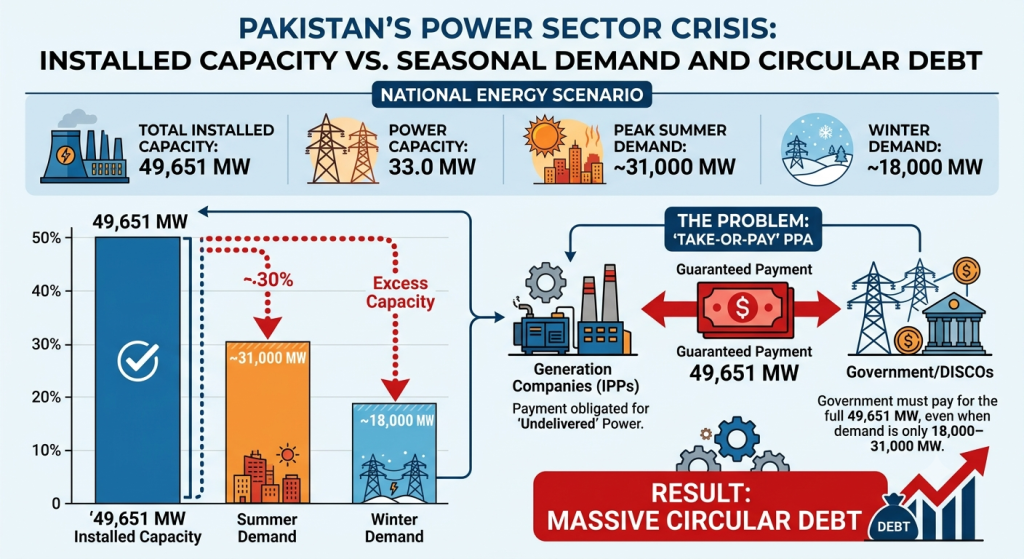
The real bottleneck lies within Pakistan’s aging electricity distribution network. Outdated 11 kV distribution lines, overloaded transformers and limited grid capacity restrict the efficient delivery of electricity to consumers. The mismatch between the generation and distribution capacities creates a significant gap between available generation capacity and actual power supply. Consequently, these distribution constraints contribute to regular power shortages and inefficiencies within the sector that produce electricity deficits. Pakistan’s electricity distribution system consists of twelve main power distribution companies. Eleven state-owned companies (LESCO, MEPCO, GEPCO & etc.) and one private company (K-Electric) are regulated by the NEPRA.
Power Purchase Agreements (PPAs)
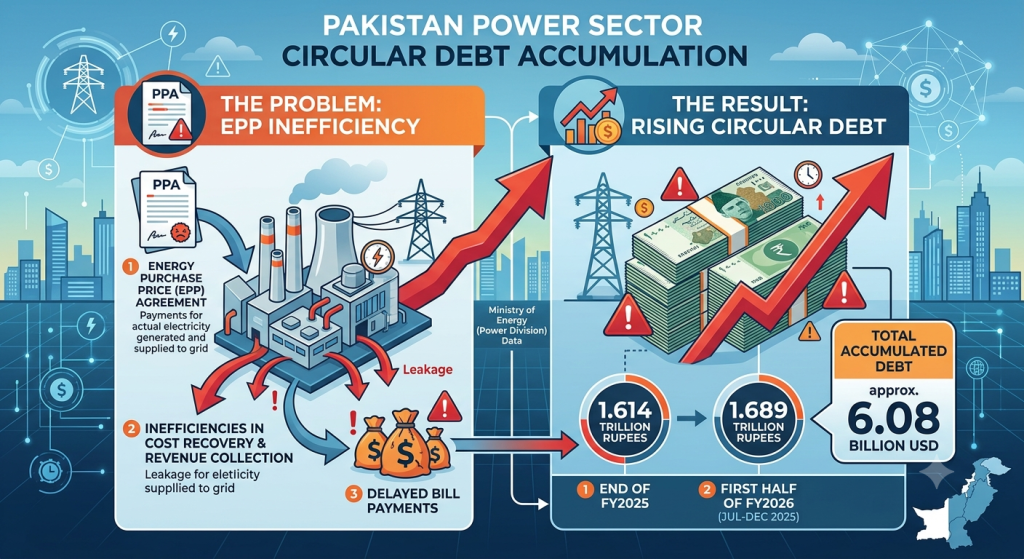
Government of Pakistan has entered into dual Power Purchase Agreement (PPAs) with IPPs. Contractual agreements are primarily based on two contracts: the Energy Purchase Price (EPP) and Capacity Purchase Price (CPP). The EPP agreement covers payments only for the actual electricity generated and supplied to the national grid. However, inefficiencies in cost recovery, revenue collection and bill payments have contributed significantly to the accumulation of circular debt in the power sector. In short, EPP inefficiency creates circular debt in the energy sector. According to the Ministry of Energy (Power Division), circular debt closed by the 2025 fiscal year at 1.614 trillion rupees. It further increased to 1.689 trillion rupees in the first half of FY2026. This amount is equivalent to approximately USD 6.08 billion.
The CPP gives rise to capacity payment charges, which are calculated based on the contracted generation capacity of a power plant rather than the actual electricity generation. The CPP contract is based on the Take-or-Pay method. Take-or-Pay method is based on a Capacity Purchase Agreement (CPA) that requires the buyer (CPPA-G) to pay for a specified amount of electricity capacity regardless of actual consumption. In simple terms, the government has to pay in full payment according to the capacity of the power generation plant even if it generates zero electricity.
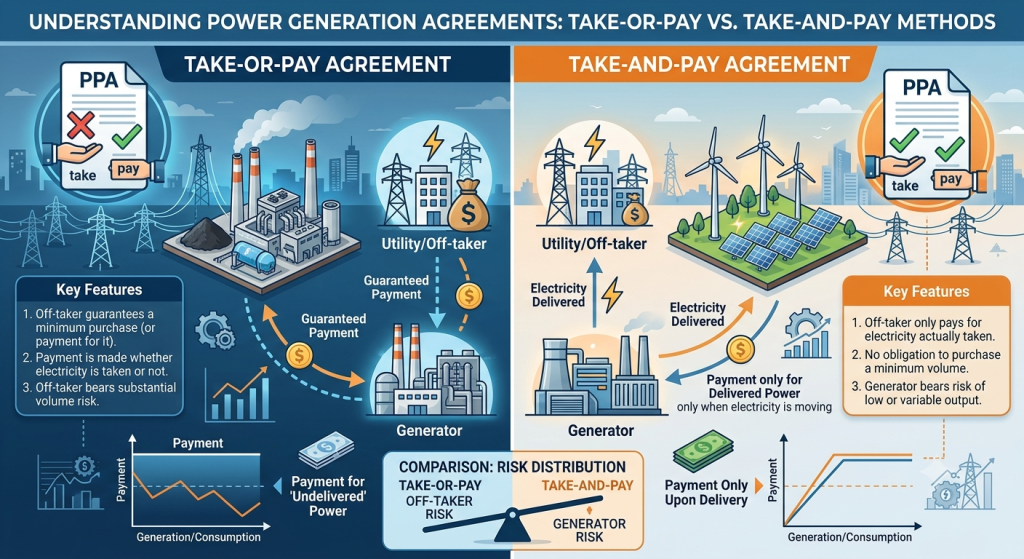
Most of the countries usually sign Take-and-Pay method agreements in which the buyer pays only for capacity used for power generation, with no obligation to pay for unused capacity. Capacity payment for IPPs reached 3.4 trillion rupees, with per-unit costs surging to 17.31 rupees per kWh. This amount in USD reached at 12.25 billion dollars. So the combined amount of capacity price and circular debt is approximately 18.33 billion dollars.
Conclusion
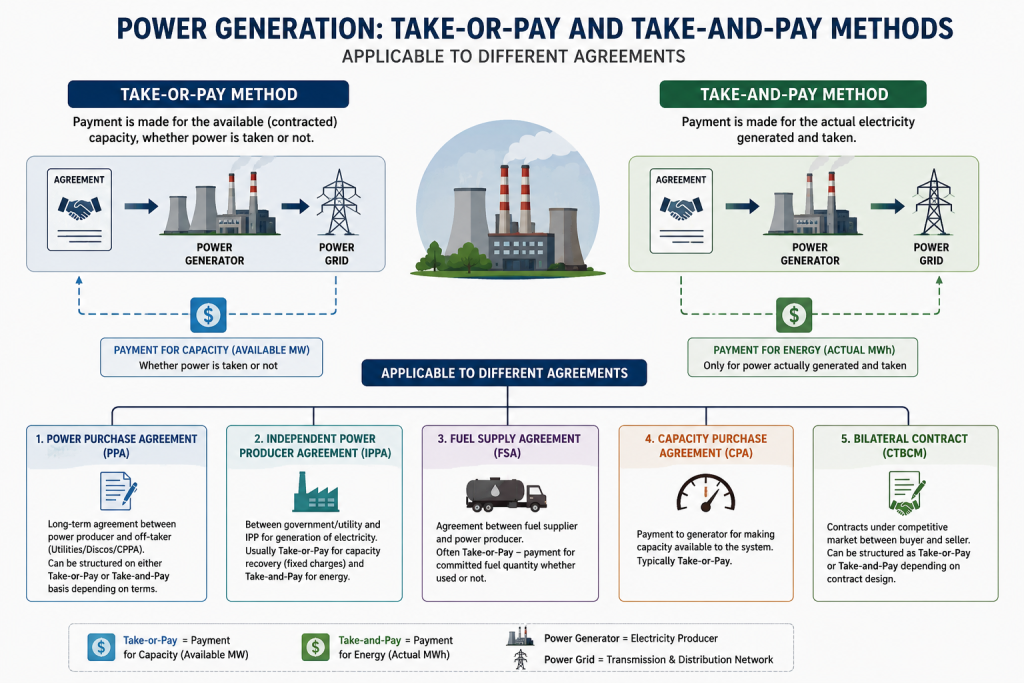
Despite significant private sector investment and the introduction of multiple policies and organizations, Pakistan’s energy sector consistently faces structural and governance challenges. A mismatch between installed capacity and weak distribution networks has created inefficiencies, causing unutilized generation and supply constraints. Take-or-pay agreements have paralyzed the whole economic system in Pakistan that put extra burden on the general public. Consistent policy changes and delayed technological transformation, regulations and market reforms have weakened institutional effectiveness and reduced stakeholder confidence. Long-term energy sector sustainability requires visualized regulatory reform, not catch-up reforms. Moreover, renegotiate contractual agreements with IPPs and transform to a Take- and-Pay method through a relational governance mechanism. Also, transform rigid grid stations into flexible grid stations that reduce the energy surplus.
About Author
Dr. Muhammad Rehman is a lecturer at Foundation University Islamabad. His expertise lies in public policy, international relations, and governance, with a focus on policy networks, global institutions, and development strategies. He analyzes how policies influence socio-economic outcomes and governance systems. Through his work, he simplifies complex policy concepts for students, researchers, and policymakers, making them practical, accessible, and relevant in today’s global policy environment.
About the Author


This is an exceptionally well-researched and insightful article. The author has demonstrated a strong understanding of Pakistan’s power sector by explaining complex issues such as circular debt, capacity payments, and energy policy in a clear and logical manner. The analysis is balanced, evidence-based, and thought-provoking, making it valuable for students, researchers, and policymakers alike. The scholar deserves appreciation for presenting such a comprehensive and practical perspective on one of Pakistan’s most critical economic challenges. Articles of this quality contribute meaningfully to informed public discussion and policy awareness. Highly recommended.
Thank you very much
This is very well researched and well written sir!
Really interesting
Very good article,allows reader to understand power sector and its effect on economy
very well researched and written, deserves appreciation.
Well coordinted and established.
Remarkable
AI
Very well researched and well-defined article,that helps the reader understand Pakistan’s power sector and its impact on the economy.
The article is well-written and well-researched, presenting the issue with commendable clarity. However, one point raises an important question: if Pakistan’s energy demand is approximately 31,000 MW and its existing power generation capacity is already 49,651 MW, why was there a need to establish additional power plants with a capacity of 11,648 MW? Rather than expanding generation capacity further, shouldn’t the focus have been on improving the efficiency of existing power plants, addressing transmission and distribution losses, and ensuring affordable electricity for consumers? Adding this small detail would have removed this confusion for the readers.