Saleeha Batool & Dr. Muhammad Rehman (Policy Analyst)
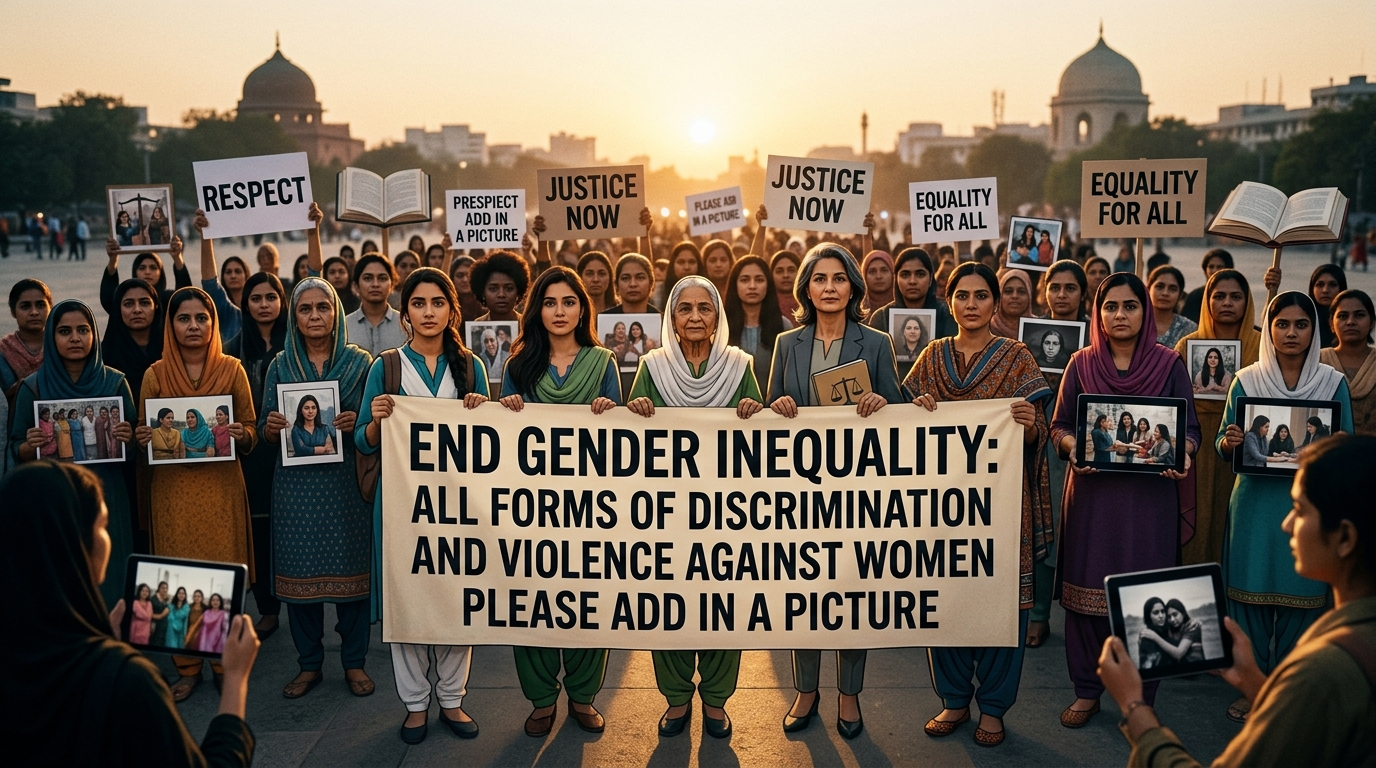
What if a single powerful transformative goal could reshape societies, strengthen economies and improve the lives of future generations altogether at the same time? Gender equality is that powerful transformative force. Gender equality not only represents a fundamental human right but also helps to achieve one of the goals of sustainable development. SDG 5 (Gender Equality) aims to achieve equality between genders, empowering all women and girls, leaving no one behind, treating everyone equally and providing equal rights. The governments, policymakers and societies may urgently achieve this goal because gender inequality remains to limit opportunities for millions of people around the world.
According to the World Economic Forum’s Global Gender Report 2025, current progress towards gender equality is not progressive because it will take approximately 123 years to close the global gender gap. On the other side, one of the most influential recent examples of progress towards gender equality was seen at the 2024 Paris Olympics. For the first time in the 128-year history of the modern Olympics, 5,250 male and 5,250 female athletes competed in the same event. This achievement indicates that equal representation is possible and highlights the importance of continued efforts to promote gender equality across all sectors of society.
This goal has 6 targets, which help reduce discrimination, diminish violence against women, terminate harmful practices, value unpaid care work, provide equal leadership opportunities and promote reproductive health and rights. The second target of the goal “end violence against women” aims to achieve safety and protection for women and girls from all forms of violence and abuse so that women can live free from fear, harassment, trafficking and domestic violence.
Global Progress Towards Gender Equality
Despite global progress towards gender equality, violence and harmful practices against women remain widespread. According to a United Nations report (2025), nearly 30% of women aged 15 years and older, or about 840 million women, have experienced physical violence. Furthermore, the World Health Organization (2026) report indicates that over the last two decades, physical violence has been reduced by about 0.2% annually. According to Girls not Brides (2026) mentioned that child marriage declined from 25% in 2015 to 18.6%, yet 12 million girls still marry annually. More than 230 million women and girls have experienced Female Genital Mutilation (FGM), while 4 million girls remain at risk each year. These statistics demonstrate the continuing global barriers to gender equality and women’s rights.
SDG 5 and Pakistan
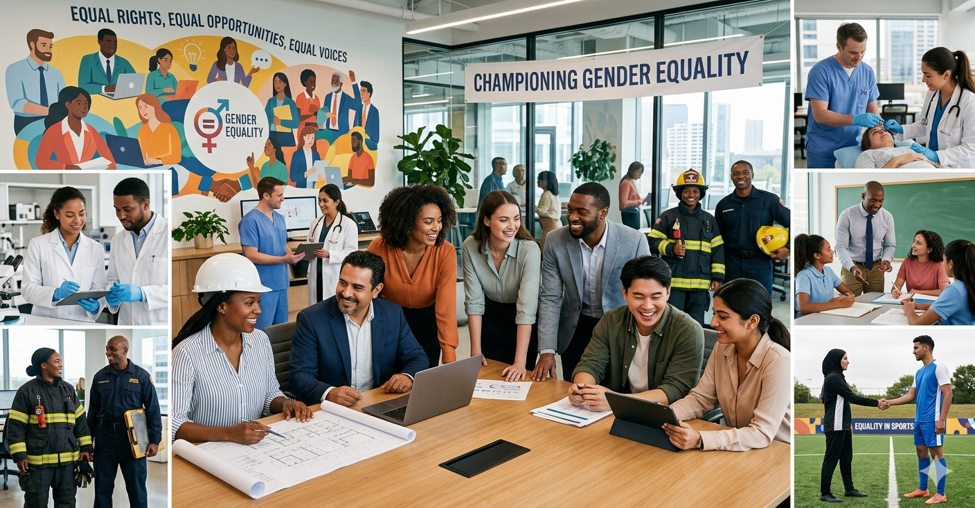
In 2015, the UN adopted the Sustainable Development Goals (SDGs) to tackle inequalities of access and to develop inclusive growth globally. According to UN Women (2024), target 5.2, which addresses this issue, is a critical element of this goal. The Convention on the Elimination of All Forms of Discrimination Against Women (CEDAW) and the Beijing Platform for Action (Beijing Platform) are international documents that set the global agenda for the protection of women’s rights. However, despite such global promises, Pakistan grapples with significant issues such as domestic violence, honour killings, workplace harassment and structural discrimination against women (Human Rights Commission of Pakistan, 2024 ).
Pakistan ranks as the 148th out of 197 countries in global gender equality, as mentioned by the World Economic Forum’s Global Gender Gap Index, with almost 53% of women who have never received any formal education. A Gallup Pakistan Labour Force Survey Analysis states that almost 24% of highly educated women are unemployed, while only 20% of women in Pakistan are employed; even those who work earn 25% less than men, based on the data from the International Labour Organisation Pakistan Gender Pay Gap Report.
Women in Pakistan hold only 6% of managerial positions, and nearly the same percentage are the national assembly candidates, stating the fact of zero participation in the country’s governance and development, making it a male-dominated country and society, as viewed by the UNDP Pakistan Private Sector Gender Review. Healthcare and safety issues make life worse for women. If Pakistan gives all these facilities of safe transport, childcare, fair pay, education and others, it would help grow the country’s economic growth by 30-60% with improvement in gender equality across the country.
Global Importance of SDG 5
Gender inequality remains a persistent challenge across many parts of the world, more specifically in societies where deeply rooted social norms, values and traditional practices shape gender roles. South Asian countries such as India, Pakistan and Bangladesh, where deeply rooted social structures continue to influence gender relations. Within these societies, the social structure is predominantly patriarchal. Generally, men occupy positions of greater authority and exercise greater influence in decision-making within families and communities.
In many male-dominated societies, women remain highly dependent on men in almost every aspect of life. Economic dependence limits women’s autonomy and restricts their access to essential resources and opportunities. According to the UN 2025 report and the World Economic Forum, significant gender disparities continue to constrain women’s access to food and other basic needs. In developing countries, economic dependence also affects many other aspects of women’s lives. It restricts their ability to participate in social, cultural, civic engagement, and political participation.
As a result, women have fewer opportunities to contribute to and benefit from society. Countries experiencing ethnic conflict often witness greater challenges in protecting women’s rights. Such conditions expose women to discrimination, violence, mobilisation restrictions and social exclusion. Early marriage is another significant barrier to women’s inclusion in many developing countries and, more specifically, traditionally oriented societies. It limits girls’ access to education, employment and active participation in politics and community development initiatives.
Supranational Institutions Reports
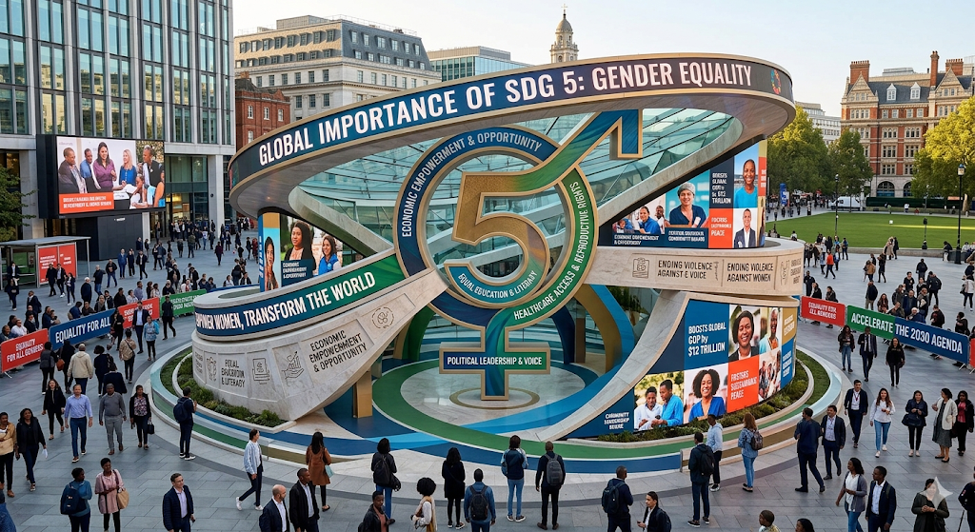
According to the United Nations (2025) report, SDG 5 is universally important; no country can develop sustainably if gender inequality is inherent in its governance structure. The objective is to achieve gender equality in education, health, employment, leadership and justice globally. The World Health Organization reports (2023) indicate that almost one-third of women around the world suffer from physical or sexual violence in their lifetime. This violence has lasting psychological effects, lower productivity, and intergenerational inequality. Gender gaps in employment and decision-making also hinder the national economic development. Countries that prioritise gender equality achieve better governance, stronger healthcare systems and greater economic resilience (UN Women, 2024). Hence, SDG 5 is not just a social justice goal but an essential development strategy for global progress.
International Frameworks Supporting Gender Equality
There are internationally binding treaties and policy frameworks to support and contribute to the work of global efforts to end discrimination against women. The Convention on the Elimination of All Forms of Discrimination Against Women (CEDAW) requires states to take measures to eliminate discrimination in education, employment, health and legal systems, etc. Likewise, the Beijing Declaration and Platform for Action offers a detailed agenda for women’s empowerment in twelve key areas, including the issue of violence and economic participation. UN Women empowers governments around the world by providing research, policy development, and institutional capacity-building programs to boost gender equality systems (UN Women, 2024). Government of Pakistan, as a signatory state to these commitments, has a legal obligation to harmonise national legislation with international human rights standards, but these commitments remain underutilised in practice due to poor enforcement (Government of Pakistan, 2023).
Gender Inequality and Violence in Pakistan
The cultural, social and institutional norms in Pakistan are highly gendered. Despite this, there is a continuation of domestic violence, forced marriage, workplace harassment, acid attacks and honour killings in different parts of the country (Human Rights Commission of Pakistan, 2024). Limited access to education, healthcare and justice systems makes rural women especially vulnerable. Pakistan is among the countries with the highest gender inequality gap in economic participation, education, and political empowerment in the Global Gender Gap Index (World Economic Forum, 2024). Stigma, a lack of institutional response, and social pressure contribute to the underreporting of gender-based violence cases. Such infrastructure results in structural barriers to the mobility, autonomy and participation of women in national development processes and perpetuates inter-generational inequalities.
Legal and Policy Reforms in Pakistan
Pakistan has introduced numerous programs, reforms, bills, acts, legal frameworks, and policies to promote women’s empowerment in 2002, including the “National Policy for Development and Empowerment of Women (2002)”, which has continued to guide gender equality initiatives in the years since its adoption. Pakistan introduced the importance of gender equality and granted women’s rights in the constitution of 1973 in Article 25 (2). After that, various programs, reforms, bills, acts, and frameworks were introduced one after another. Unfortunately, most of these government initiatives regarding women’s empowerment were not able to achieve their goals because legislature and executive branches were not able to implement them effectively on the ground.
Pakistan has introduced several legal reforms to tackle violence and discrimination against women. The Punjab Protection of Women Against Violence Act, 2016, established a comprehensive framework that provides women survivors with legal assistance, media care, protection services, and emergency responses through Women Protection Centers (Government of Punjab, 2016). Sindh has also passed domestic violence laws to place legal accountability within the family. Laws on workplace harassment offer a formal complaint process and disciplinary actions for the purpose of creating safer working environments. The Anti-Rape Ordinance has enhanced the procedures of forensic investigation and judicial processes of sexual violence cases (Government of Pakistan, 2021). Though there have been institutional improvements, these reforms are undermined by weak enforcement and the limited resources available. Furthermore, Pakistan introduced the National Policy for Development and Empowerment of Women 2006, and also a National Plan of Action on Women, National Gender Policy Framework (NGPF).
Case Study 1 – Mukhtar Mai and Gender Justice
Mukhtar Mai’s case is a landmark in Pakistan’s quest for gender justice. She was gang-raped on the orders of a tribal council in 2002, attracting international condemnation (BBC News, 2022). Rather than sitting quietly, she fought for justice in court and established herself as a worldwide women’s rights activist. Her case highlighted the shortcomings of the judicial and tribal system in Pakistan, especially in the rural administration. Mukhtar Mai became a proponent of girls’ education and empowerment by setting up schools. Her spirit turned her into a symbol for survivor-led activism and brought discussions of law and social reform in Pakistan and around the world.
Case Study 2 – Qandeel Baloch and Honor-Based Violence
In 2016, the killing of Qandeel Baloch brought attention to the prevalent problem of honour killings in Pakistan. She was a social media personality who was fighting the traditional gender norms and was promoting the freedom and autonomy of individuals (Al Jazeera, 2016). Her murder by a family member sparked nationwide and international outcry. The incident prompted a legal change to seal loopholes which had enabled the family to grant amnesty to the perpetrators of honour killings (Government of Pakistan, 2016). Even with legal reforms, the cultural resistance to women’s independence is strong in many communities and thus restricts the effects of the reforms.
Education and Economic Empowerment of Women
Education and economic empowerment drive gender equality and reduce violence against women. Girls’ education expands economic opportunities and strengthens social inclusion. Pakistan promotes girls’ education through the Benazir Income Support Programme (BISP) and Benazir Taleemi Wazaif. Since these programmes were launched, more than 12 million children have been enrolled in schools. It has also disbursed over Rs 215.9 billion in education stipends. Women’s education promotes financial independence and empowers them to participate actively in household, community and decision-making processes. Empowerment helps to break the cycle of abuse and encourages the reporting of violence. Women’s involvement in the economy is further strengthened by vocational training, microfinance and entrepreneurship programs. These activities help bring about long-term social change and better development results.
Media and Digital Activism
Media and digital platforms are playing an important role in sensitising people regarding GBV in Pakistan. A variety of problems like harassment, domestic abuse and discrimination are being brought to light through traditional and social media (Digital Rights Foundation, 2024). Digital activism enables survivors and advocates to share their experiences and hold institutions to account. But online harassment and cyber violence against women are still serious issues which are hampering women’s participation in online spaces. Despite these dangers, the media remains the strongest tool which can be used for advocacy, policy influence and social awareness.
Implementation Challenges
Pakistan is struggling with major structural factors in its quest for effective implementation of gender equality policies. There is often a lack of awareness on the part of law enforcement officials when it comes to identifying gender-specific incidents of violence and reporting these incidents. Time-consuming justice system delays and the complexity of the legal process hinder access to timely justice. Lack of shelter, legal assistance and counselling in rural areas. Violence remains normal, and women’s autonomy is still limited by patriarchal norms. Poor institutional coordination and lack of funding also make the policy less effective. All systemic governance barriers contribute to the delay in SDG 5 being achieved.
Conclusion
The realisation of SDG 5 in Pakistan necessitates a wide institutional change and cultural shift. Gender sensitivity training for law enforcement is required. Gender equality/human rights education should be embedded in the educational curriculum. Media must be responsible when it comes to representing women. There is a need to provide more financial assistance to shelters, legal aid and rehabilitation services. Effective implementation and accountability require collaboration between government institutions, civil society and international organisations.
Gender equality is crucial in the pursuit of sustainable development, social justice and inclusive economic growth. SDG 5 is an international goal to ensure that women and girls are no longer discriminated against and victims of violence through legislative, institutional and cultural reforms. Pakistan has made significant strides in the legislative arena, yet gaps in implementation are holding back progress. Case studies of Mukhtar Mai and Qandeel Baloch reveal systemic issues and the urgent need for reform. It takes concerted action from government, society, and global institutions for sustainable progress.
Ultimately, achieving gender equality in Pakistan will strengthen National development, promote human dignity, reduce gender inequality and develop inclusive, sustainable economic growth. Furthermore, it will expand opportunities for women, improve social justice, and support long-term sustainable development.
References
- Al Jazeera. (2016). Qandeel Baloch murder and honor killing debate. https://www.aljazeera.com
- BBC News. (2022). Mukhtar Mai: Fight for justice. https://www.bbc.com
- Benazir Income Support Programme. (2024). Women’s empowerment initiatives. https://www.bisp.gov.pk
- Digital Rights Foundation. (2024). Online harassment in Pakistan. https://digitalrightsfoundation.pk
- Government of Pakistan. (2016). Honor Killing Amendment Law. https://www.pakistancode.gov.pk
- Government of Pakistan. (2021). Anti-Rape Ordinance. https://www.pakistancode.gov.pk
- Government of Punjab. (2016). Women Protection Act. https://punjablaws.gov.pk
- Human Rights Commission of Pakistan. (2024). Annual gender report. https://hrcp-web.org/hrcpweb
- United Nations. (1979). CEDAW Convention. https://www.un.org/womenwatch/daw/cedaw
- United Nations. (2025). SDG Report. https://unstats.un.org/sdgs/report/2025
- UN Women. (2024). Gender equality framework. https://www.unwomen.org
- World Economic Forum. (2024). Global Gender Gap Report. https://www.weforum.org/reports/global-gender-gap-report-2024
- World Health Organization. (2023). Violence against women factsheet. https://www.who.int/news-room/fact-sheets/detail/violence-against-women
- Nawaz, M., Aslam, A. B., & Tariq, F. (2021). Evaluation of government programs and policies to eradicate gender disparities in Pakistan. Global Regional Review (GRR), 6(3), 22–36. https://doi.org/10.31703/grr.2021(VI-III).03
Authors
Saleeha Batool is a Mass Media Communication student at Foundation University Islamabad with a strong academic interest in women’s empowerment, gender equality, media governance and sustainable development. Her research focuses on gender equality policies, governance mechanisms, policy implementation, institutional accountability, and strategic communication to examine their role in promoting inclusive development and social justice.
Administrator
Dr. Muhammad Rehman is a policy analyst focused on global governance, energy policy, and Public-Private Partnership (PPP) mechanisms across sectoral development projects. He writes for Global Policies Analysis, examining how supranational institutions and policy frameworks shape development outcomes worldwide.
About the Author


Excellent article. It presents a balanced and evidence based analysis of gender equality in Pakistan. I especially liked how it highlighted both the progress made and the challenges that still need attention. A very informative and thought provoking read. Thank you for sharing your insights.
Thank you very much sir.