
Dr. Muhammad Rehman (Policy Analyst)
Globalization refers to economic activities, policy formulation, implementation, trade, industrialization, and technological advancements, fostering a more interconnected and interdependent world. In addition, the scope of globalization inflates to include intervention by business entities, government, and supranational institutions (Yeganeh, 2021). Furthermore, Chien et al. (2021) stated that globalization is contributing to the development of financial market activities but simultaneously creates an alarming situation for environmental sustainability.
Both developing and developed countries attempt to increase the rate of economic growth while concurrently navigating the complexities and regulating environmental policies. Globalization pursuit by shaping international socio-economic development and industrialization and facilitating access to the global market. However, the influence of the corporate sector for the sake of economic prosperity activities introduces environmental challenges. The economic trade activities around the globe lead to environmental challenges like GHG emissions, deforestation, resource depletion, carbon emissions, air pollution, and loss of biodiversity. The aim of this blog is to investigate the connectivity among factors like the influence of financial globalization and environmental global policies, practices and issues.
The Nexus Between Environmental Policies and Economic Growth
The interconnection between environmental policies and practices and economic growth is a critical aspect of contemporary governance. Environmental policies, involving regulations, standards and initiatives, shape the practices adopted by industries and markets (Moslehpour et al., 2023). There are multiple best practices that international policymakers implement along with best practices for environmental sustainability, like reducing fossil fuel energy and implementing renewable energy sources, energy efficiency programs, environmental advocacy programs, hybrid transportation systems, and water and biodiversity conservation (Engelbrecht Hansen et al., 2023; Garrett-Peltier, 2017, Lu et al., 2020).
There are multiple environmental policies (United Nations Framework Convention on Climate Change (UNFCCC), Paris Agreement (PA), Convention on Biological Diversity (CBD), and Aarhus Convention) that are implemented to protect environmental sustainability (Ekardt et al., 2023; Streck, 2023; Thajb et al., 2022). Conversely, the industrialization sector’s oligarchy places greater emphasis on commerce, economic expansion, and output than on implementing industry best practices (Farias and Roger, 2023; Goldstone, 2002; Shleifer and Vishny, 1998).
Financial Globalization Intricate Financial Issues
The term “financial globalization” describes how the free market of capital, investments, and financial services across national borders has led to an increase in the connectivity and interdependence of financial markets throughout the world (Garrett-Peltier, 2017). There are advantages and disadvantages to this occurrence in terms of environmental issues. Financial globalization has the potential to force economic expansion and technological progress, hence furnishing the necessary resources and inventiveness for environmental sustainability activities. Economic growth and profit often drive resources overuse, causing environmental harm and complicating the enforcement of international environmental laws. To address complex issues arising from this complex connection, comprehensive regulations that support sustainable practices and international collaboration. These measures can help balance between financial globalization with environmental conservation.

Global Governance
Global governance manages common interests and handles global issues; states, institutions, and other players work together to create a system known as global governance. It involves multiple global institutions such as the World Bank, Asian Development Bank (ADB), and the UN, etc. Global energy governance institutions are UNEP, IPCC, World Bank -environmental, Natural Resources and Blue Economy, Green Climate Fund (GCF), IUCN, and Global Environmental Facility (GEF). These supranational institutions establish rules, norms, values, laws, regulations, and practices that serve as a framework for decision-making and collective course of action for the organizations. It includes global challenges, including economic stability, human rights, and climate change, as well as initiatives to control and regulate them beyond frontier boundaries. These initiatives encourage cooperation to accomplish shared objectives (Kayode-Ajala, 2023; Marelli, 2023).
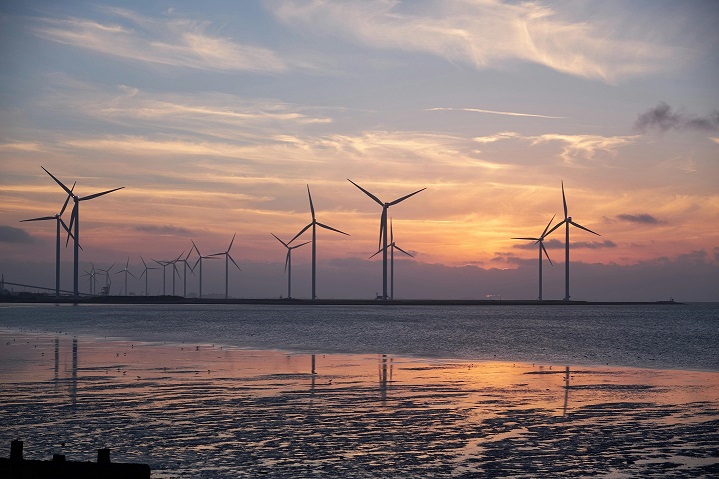
The Role of Global Governance To Balance Economic Growth and Environmental Sustainability
International policy and global institutions may be coordinated to successfully combine environmental sustainability with economic growth. Global economic policies with environmental concerns are shaped in large part by organizations such as the United Nations (UN), World Bank, and International Monetary Fund (IMF). A framework for incorporating environmental sustainability into global development policies is provided by the UN through programs like the Sustainable Development Goals (SDGs) and the United Nations Framework Convention on Climate Change (UNFCCC).
Moreover, other regional institutions like the European Union, ASEAN, SAARC, and China’s development programs contribute to sustainable development through shared policies and regulations. Additionally, financial institutions like the World Bank, Asian Development Bank, and Green Climate Fund support sustainable projects and investments to secure connectivity, financial growth, and environmental sustainability.
For instance, Pakistan’s power generation projects under the umbrella of CPEC all the projects related to fossil fuel (coal power plants). GoP adopted the PPP mechanism for power generation. Governments around the world as well as the government of Pakistan (GoP), may adopt eco-friendly policies, while financial investment organizations should prioritize development projects’ environmental policies and governance criteria. Collaboration on global financial and environmental agreements, innovative green financing and widespread adoption of sustainable practices are essential for a resilient and environmentally conscious global economy.
References
- CHIEN, F., AJAZ, T., ANDLIB, Z., CHAU, K. Y., AHMAD, P. & SHARIF, A. 2021. The role of technology innovation, renewable energy and globalization in reducing environmental degradation in Pakistan: a step towards sustainable environment. 177, 308-317.
- COPELAND, B. R. 2021. Globalization and the Environment. 575.
- EKARDT, F., GÜNTHER, P., HAGEMANN, K., GARSKE, B., HEYL, K. & WEYLAND, R. 2023. Legally binding and ambitious biodiversity protection under the CBD, the global biodiversity framework, and human rights law. 35, 80.
- ENGELBRECHT HANSEN, A., BORGMAN, E., FISCHER-BOGASON, R., NAINGGOLAN, D., ENGEN, S., TUNAAL WHITE, L., OLSEN KYRKJEEIDE, M., NOWELL, M. S., WORONIECKI, S. & HEIMES, K. 2023. Synergies between climate and biodiversity objectives in laws, policies and management practices, Nordic Council of Ministers.
- GARRETT-PELTIER, H. 2017. Green versus brown: Comparing the employment impacts of energy efficiency, renewable energy, and fossil fuels using an input-output model. 61, 439-447.
- FARIAS, D. B. L. & ROGER, C. 2023. Differentiation in environmental treaty-making: Measuring provisions and how they reshape the depth–participation dilemma. 23, 117-132.
- GOLDSTONE, J. A. 2002. Efflorescences and economic growth in world history: rethinking the” Rise of the West” and the Industrial Revolution. 323-389.
- KAYODE-AJALA, O. 2023. Establishing cyber resilience in developing countries: an exploratory investigation into institutional, legal, financial, and social challenges. 8, 1-10.
- LU, Y., KHAN, Z. A., ALVAREZ-ALVARADO, M. S., ZHANG, Y., HUANG, Z. & IMRAN, M. 2020. A critical review of sustainable energy policies for the promotion of renewable energy sources. 12, 5078.
- MARELLI, M. 2023. The law and practice of international organizations’ interactions with personal data protection domestic regulation: At the crossroads between the international and domestic legal orders. 50, 105849.
Bibliography
- MOSLEHPOUR, M., EKOWATI, D. & SULISTIAWAN 2023. Corporate Sustainability Practices in Indian Automobile Industry: Enhancing Government Initiatives, Economic Improvements, and Environmental Practices. 34, 456-469.
- OKERE, J. & CHIKE, I. J. 2020. Globalization and national policy-making in third world countries. 10.
- SHLEIFER, A. & VISHNY, R. W. 1998. The grabbing hand: Government pathologies and their cures, Harvard University Press.
- STRECK, C. 2023. Synergies between the Kunming-Montreal Global Biodiversity Framework and the Paris Agreement: the role of policy milestones, monitoring frameworks and safeguards. 23, 800-811.
- THAJB, A. S., ANUAR, H. M. & AYUB, Z. A. 2022. Legal Fragmentation Of Iraqis Forest Legislations, A Case Study Of Adoption The Forest Management Under United Nations Framework Convention Of Climatic Change (UNFCCC) And Biological Diversity (UNCBD). 4681-4689.
- YEGANEH, H. 2021. Emerging social and business trends associated with the Covid-19 pandemic. 17, 188-209.
About Author
Dr. Muhammad Rehman is a lecturer at Foundation University Islamabad. His expertise lies in public policy, international relations, and governance, with a focus on policy networks, global institutions, and development strategies. He analyzes how policies influence socio-economic outcomes and governance systems. Through his work, he simplifies complex policy concepts for students, researchers, and policymakers, making them practical, accessible, and relevant in today’s global policy environment.
About the Author


great