Aribah Adil Butt & Dr. Muhammad Rehman (Policy Analysist)
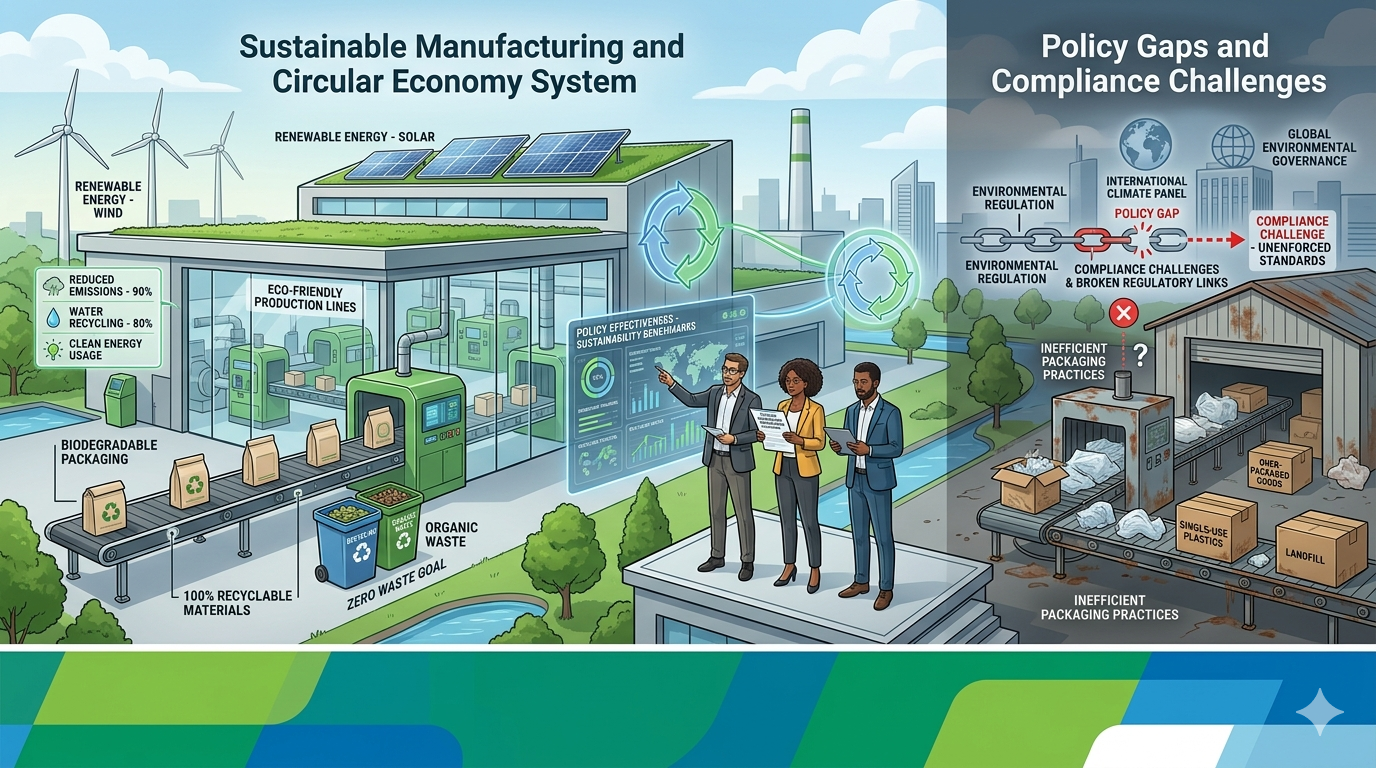
Global industries face a difficult task to reengineering the production. They must support economic progress while reducing harm to the environment. Yet many policies on sustainable manufacturing processing and packaging fall short of their goals around the world. Rules often lack proper enforcement while public institutions work separately with limited coordination. The result is greater resource consumption more waste and continued pressure on natural process. A practical path forward lies in the circular economy, which keeps materials in use for longer periods and reduces waste. It promotes reuse, repair, recycling and responsible production to improve resource efficiency and sustainability. This blog examines the gap between policy promises and real-world outcomes and discusses policy reforms needed to support a circular and resource-efficient future.
Global Trends in Plastic Consumption and Waste Generation
The growing consumption of packaged goods has significantly increased plastic waste, resource depletion, and industrial greenhouse gas emissions. Plastic consumption continues to rise, closely following the global GDP growth rate. Accordingly, UNEP and OECD reports, 460 million tonnes of plastics enter global markets each year. Meanwhile, around 360 million tonnes of plastic waste are generated annually. This rapid increase in plastic waste present a major global environmental challenge. Nearly 70% of plastic waste remains uncollected or improperly administratively managed. Large quantities leak into ecosystems, accumulate in landfills, or dumped in land are openly burned. There have been policies formulated dating back to 1999 till 2025 worldwide.
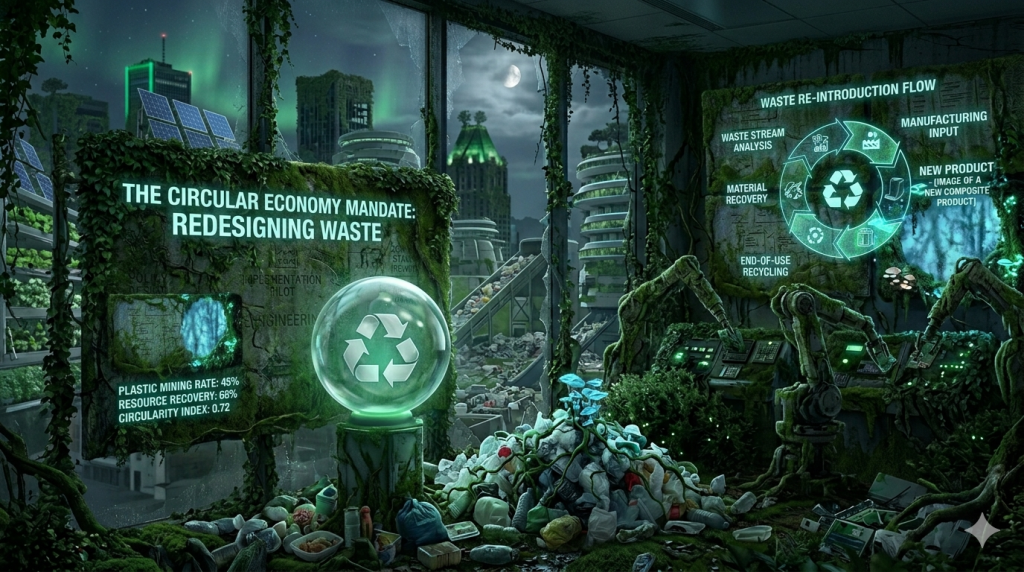
Comparison among Asian Countries
In the Asian Continent, China has formulated policy National Standard on Restricting Excessive Packaging of Food and Cosmetics (2023). The policy implemented by the Ministry of Economy and Ecology. India introduced the Plastic Waste Management (PWM) in 2016. The initiative support the objectives of the National Environmental Policy (2006). The Ministry of Environment, Forest and Climate Change (MoEFCC) do implementation of this policy. Moreover, India and China also collaborate with the UN Environment Program Asia-Pacific Office. This collaboration is crucial as they provide technical solutions and promote regional operations in sustainability management in the region.
Pakistan Vision 2025 promotes security, energy, water, and food sustainability through its Fourth Pillar and long-term development agenda. The Third Pillar supports sustained, indigenous, and inclusive growth by encouraging economic development and social progress nationwide. Pakistan aligns these pillars with SDG 11 to promote sustainable cities, communities, and improved urban environmental management. The government implements Target 11.6 by reducing urban environmental impacts and strengthening waste management systems across cities. Pakistan also supports SDG 12 by encouraging responsible consumption patterns and sustainable production practices throughout industries. The government pursues Targets 12.4 and 12.5 by managing chemicals safely and reducing overall waste generation. Pakistan implements the National Environmental Policy 2004 through state funding, institutional support, and regulatory mechanisms.
European Union Initiative
The European Union is implements the Action Plan 2022 to advance environmental sustainability and improve resource efficiency across member states. The European Commission Directorate-General for Environment directs the plan and coordinates sustainability initiatives throughout the European Union. The Environment Agency (EEA) supports implementation by monitoring environmental performance and providing scientific evidence for policymaking. Germany leads European sustainability initiatives, while the Umweltbundesamt supports policy implementation and promotes environmental protection measures nationwide. France advances these initiatives through ADEME, which promotes resource efficiency, waste reduction, and sustainable production practices.
North America and Canada
Similarly, in North America, Canada is also hand-in-hand with it via the Canadian Environment Act under the governing body of Environment and Climate Change Canada (ECCC) while the US body governing this initiate is the Environmental Protection Agency (EPA) and Organization for Economic Cooperation and Development (OECD) to manage unsustainable manufacturing and packing practices that have resulted in high material waste, low recycling rates and growing dependence on non-renewable resources. This situation demands targeted policy intervention to promote sustainable production and consumption patterns across industries.
The issue arises when industries do not shift from non-renewable materials such plastic and not switch to renewable packaging materials ultimately leading to high levels of waste and pollution. Global packaging production according to reports has almost increased 20% in the last decade and about 40% of all plastic waste comes from packing alone (statista, 2025). The alarming increase in plastic waste contributes significantly to global warming and other environmental challenges worldwide. Sunlight exposure releases harmful gases, including carbon compounds, methane, and ethylene, from plastic materials. Burning PVC plastics emits toxic pollutants, including dioxins and hydrogen chloride, into the atmosphere. These emissions threaten environmental sustainability and worsen climate-related problems across the globe (Berger, 2023).
Linear Production Model
The linear production model is a major contributor to growing waste generation and environmental degradation. It follows an “extract-create-discard” approach that relies heavily on continuous resource consumption. Raw materials are extracted, manufactured into products, used briefly, and then discarded as waste. This process generates substantial production, manufacturing, and processing waste throughout the product lifecycle. As a result, significant gaps emerge in waste management systems and policy implementation. Effective waste management remains challenging due to multiple economic, technical, and institutional barriers. Therefore, improving policy implementation requires addressing these underlying challenges through coordinated and sustainable interventions. Some policy challenges are given below:
1. One issue is that Small and Medium-Sized Enterprises (SMEs) struggle to consider moving their current linear production model to a circular model, as scalability is a major challenge if they attempt to make the switch. This makes it impossible for businesses to switch from this model, as a promising alternative is not yet present.
2. Cost-effectiveness is also one of the major issues.
3. Another core cause of this is the linear production model, which the majority of industries follow today. It’s where materials are produced and used once only, and afterwards, they’re just discarded.
4. Most of the developing regions are still lacking recycling infrastructure. On the other hand, even in advanced economies such as the EU and the U.S., only around 50% of packaging waste is effectively and properly recycled, which is a serious issue.
5. Major cause is the lack of enforcement of sustainability laws in numerous countries, and the limited incentives or rewards for companies that actually shift to green technologies.
As a result, food, e-commerce, and cosmetics sectors generate waste beyond the capacity of existing management systems. In the cosmetics industry, influencer PR packages often contain excessive and non-recyclable packaging materials. To address this issue, policymakers increasingly promote circular economy strategies that emphasize reuse, recycling, and sustainable product design.
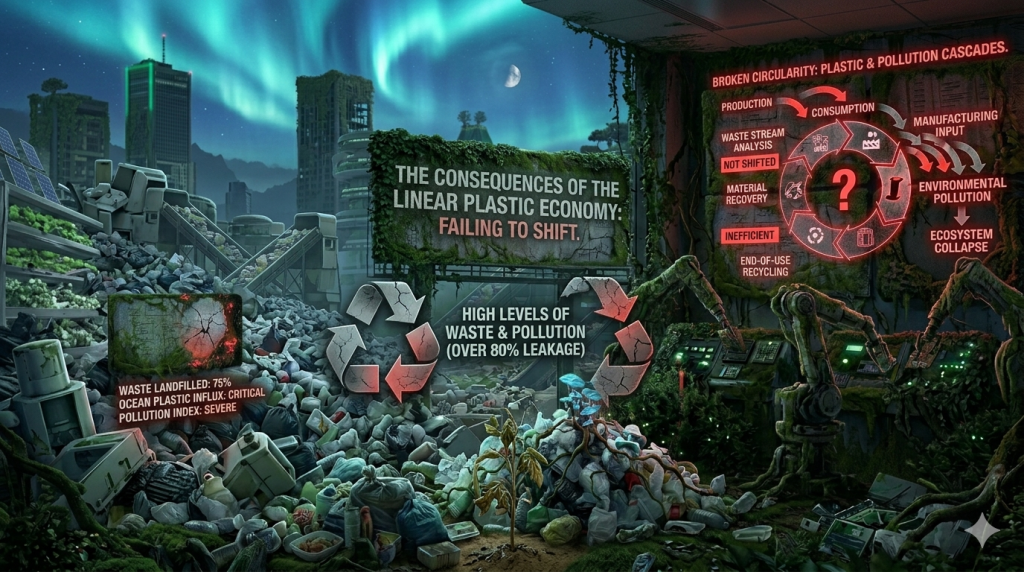
Evaluation
Countries such as Germany, the United States, Japan, Canada, and India have adopted Extended Producer Responsibility (EPR) systems. Under EPR, manufacturers are responsible for collecting and recycling their packaging waste and managing resources sustainably. In Asia, countries such as China, Pakistan & India are rapidly urbanizing, increasing demand for packaged goods. Alongside the urbanization, these countries have massively industrialized their economies, leading to the continuous growth of industries. There are also major hubs for small and medium-sized enterprises (SMEs), which contribute significantly to economic development. India formulated the National Environmental Policy (2006) to strengthen environmental governance and promote sustainable resource management practices. In 2006, India introduced Plastic Waste Management (PWM) rules incorporating (EPR) , later amended in 2022 to single-use food packaging (straws, plastic sticks, wrapping films etc.).
Comparison and Suggestion
The Ministry of Environment, Forest & Climate Change (MoEFCC) oversees the implementation of plastic waste management regulations. State Pollution Control Board and Pollution Control Committee enforce rules related to plastic product manufacturing and multilayered packaging. These authorities also regulates the regulate the registration, collection, processing and environmental sound disposal of plastic waste. However several challenges hinder the effective implementation of (Extended Producer Responsibility (EPR) regulations. High recycling costs make EPR compliance difficult for new entrepreneurs, leaving many businesses outside government monitoring and enforcement systems.
China in terms of sustainability is more focused on biodegradable packaging according to their new policy and reducing the materials used for packaging as it is an e-commerce giant. China produces about 45 million tons of plastic annually for its packaging sector (Fang Xi, 2022). To address this, China introduced the National Standard on Restricting Excessive Packaging of Food and Cosmetics Policy 2023. However, the policy still faces several implementation challenges, such as weak enforcement, limited monitoring capacity, and industry compliance issues.
- Lacks basic infrastructure meaning policy was created but lacks implementation.
- Non-compliance among small exporters, lack of awareness, poor transparency and weak monitoring hinder effective waste reduction and implementation.
- Monitoring packaging waste and collecting reliable data remain challenging, making it difficult to identify the largest contributing sectors.
- Real-time tracking of waste remains challenging, making it difficult to accurately trace its sources and quantify contributions from each sector.
In China, The Ministry of Ecology and Environment (MEE) and the State Administration for Market Regulation (SAMR) have partnered to actively monitor these policy gaps, but there is still room for improvement.
In Pakistan, several policies waste management, including the Hazardous Waste Management Policy 2022. Pakistan Vision 2025 (Pakistan Vision, 2025) & the National Environmental Policy 2004 also emphasize proper management of manufacturing and packaging waste.
Pakistan generates about 3.3 million tons of plastic waste annually (Statista, 2025). Despite these policies, implementation remains weak, especially in rural areas. Waste is often improperly discarded in places such as Canal Colony areas in Punjab. Similar issues are observed in hilly and plain regions of Khyber Pakhtunkhwa. Coastal and urban areas in Sindh also face poor waste management. Sparsely populated regions of Balochistan are similarly affected. Rapid urbanization and population growth have increased waste generation by approximately 2.4%.
Issues arise as there is
- No proper check and balance on industries and SMEs.
- Lack of a comprehensive Circular Economy Model where the product is not just discarded after one use but recycled again.
- Lack of effective data monitoring and unified sectoral database.
Policy Gaps
In Europe, The European Union’s EU Action Plan (Brussels, 2021) is a policy at EU level is one of the major global attempts to address this by making packaging recyclable or reusable by 2030. Countries like Germany and France are already pushing strict recycling targets and handing out fines to companies that don’t meet environmental standards. European Union, (2025-26) challenges such as
- Standards upheld in this policy are even weaker than that of the WHO recommendations which raises questions about the quality of work done.
- A great insufficiency of fresh drinkable water and aquatic pollution laws as major firms usually dump waste back into the ocean.
- Besides this, the major issue arises with funding such a massive policy plan spearheaded by Germany and France. The required budget shows the need for approximately 100€ to 150€ billion Euros (Brussels, 2021) (statista, 2025) till 2030 and that is without the additional fundings and investments that will be needed in the entire EU.
- The issue of weak enforcement and implementation in several EU countries. There’s also a severe overall issue and could possibly signal a trade-off as the plan itself no doubt spans in all major domains, lack of proper synergy between air, water, soil, chemical, waste, and consumer products.
In North America, the United States and Canada focus more on innovation and voluntary business action rather than strict regulations. Canada’s Environmental Protection Act 1999 addresses hazardous waste management, later strengthened by Zero Plastic Waste Initiative 2018, according ECCC 2019. California’s Plastic Pollution Prevention and Packaging Producer Responsibility Act 2022 requires producers to make packaging recyclable or compostable by law. It also mandates 25% reduction in plastic packaging and 65% recycling by 2032, setting strong corporate targets globally (Staff, 2025).
Yet, the absence of a unified federal framework in the U.S. limits countrywide effectiveness. The OECD (Organization for Economic Co-operation & Development) is a notable organization that has formulated Environmental Outlook 2025 noting significant corporate investment, the continent’s recycling rate for packaging materials remains below 50%, with wide differences between regions. and several U.S (Environment and Climate Change Canada (ECCC), 2019). Different states have passed laws supporting sustainable packaging and design, But without a single national law in the U.S. to tie it all together, the progress really depends on how the states of America come together under one law.
Policy Recommendations
Ultimately, the core problem is the same everywhere; too much production, not enough recycling, different regions are tackling it in their own ways. Asia is focusing on legislation and reforms, Europe is using strong regulations, and North America is banking on innovation and corporate responsibility. Effective collaboration between governments, industries, and citizens rather than isolated national efforts is essential to achieving global sustainability goals in manufacturing and packaging.
International cooperation and stronger policy enforcement can create a more sustainable and environmentally responsible manufacturing system. Achieving sustainable manufacturing, processing, and packaging requires effective regulations, technological innovation, industry engagement, and public support. These combined efforts can significantly reduce waste generation and improve long-term environmental sustainability.
The world is increasingly embracing sustainability to address environmental and resource management challenges. However, economic differences make uniform environmental regulations difficult to implement worldwide. Developed, developing, and underdeveloped countries face distinct environmental and economic priorities. Therefore, manufacturing, processing, and packaging policies must reflect each country’s economic circumstances. A universal policy framework may not effectively address regional challenges and development needs. Instead, countries should adopt tailored targets aligned with global sustainability objectives. Regional priorities can help address the most pressing environmental issues more effectively. This approach enables the implementation of suitable Extended Producer Responsibility strategies. Collectively, these efforts can improve global manufacturing, processing, and packaging sustainability.

Authors
Aribah Adil Butt holds a Bachelor’s degree in Mass Communication from Foundation University Islamabad. She has a keen interest in global issues, industrialization, sustainable development, and contemporary policy challenges. Her work focuses on exploring the social, economic, and environmental dimensions of global transformations, with particular attention to industrial development and its implications for society. Through her writing, she aims to promote informed discussions on emerging global trends and policy issues. Email: aribahadil0921@gmail.com
Dr. Muhammad Rehman has done Ph.D in Governance and Public Policy at the National University of Modern Languages (NUML), Islamabad. His research interests include public policy, governance, sustainable development, global governance, environmental policy, and policy analysis. He regularly writes on contemporary governance challenges, sustainability issues, and public sector reforms, providing evidence-based insights for academics, policymakers, and practitioners.
About the Author