Dr. Muhammad Rehman (Policy Analyst)
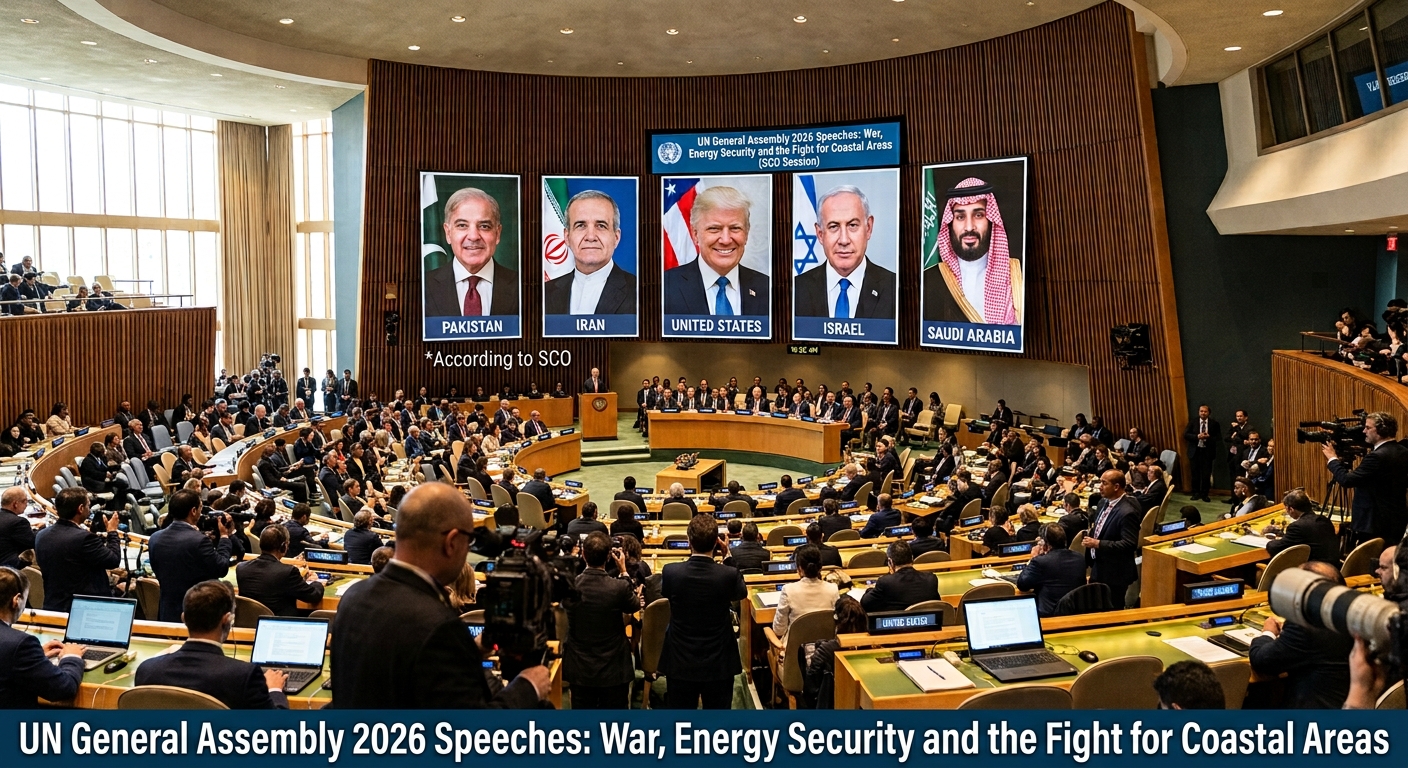
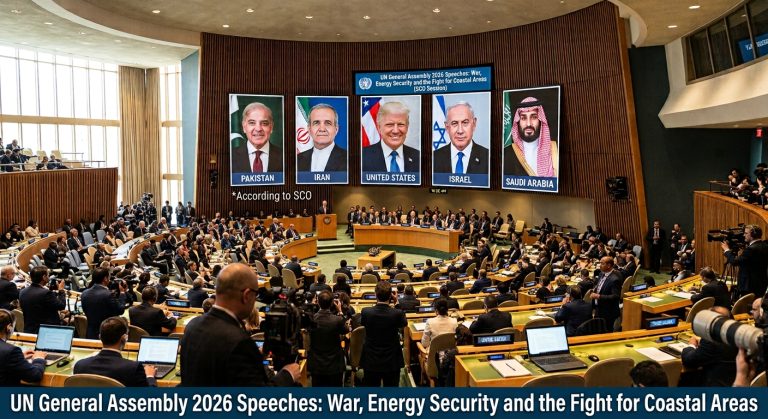
The United Nations General Assembly (UNGA), the UN’s principal deliberative and representative body, brings together member states to debate global challenges and shape international policy. The 81st session met amid a war that has shaken oil prices, shipping lanes (coastal areas and waterways) and household budgets. Critically analyzing the speeches of Pakistan, Iran, the United States, Israel and Saudi Arabia line by line. Then also added India’s reply. Here is what they said, what contradicts it, and what it means for Trust, energy security and conflicts & disputes among the countries.
UNGA is Restoring Trust
The session theme is restoring trust and managing transformation. Khalilur Rahman of Bangladesh presides over it. Pakistan’s Prime Minister Shehbaz Sharif took the theme literally. He said, “But trust cannot be restored by simple words alone.” It was a fair warning. Yet the same hall heard threats and accusations. Trust was the theme. Distrust was the mood. In today’s international system, countries often compromise trust when national interests take priority over bilateral relations and international diplomacy. Energy security, resource competition, geopolitical influence, and the pursuit of dominance are reshaping global alliances. The emerging world order is therefore not built only on cooperation, but also on strategic interests, shifting partnerships, and competing centres of power.
Waterways are Arteries of the Global Economy
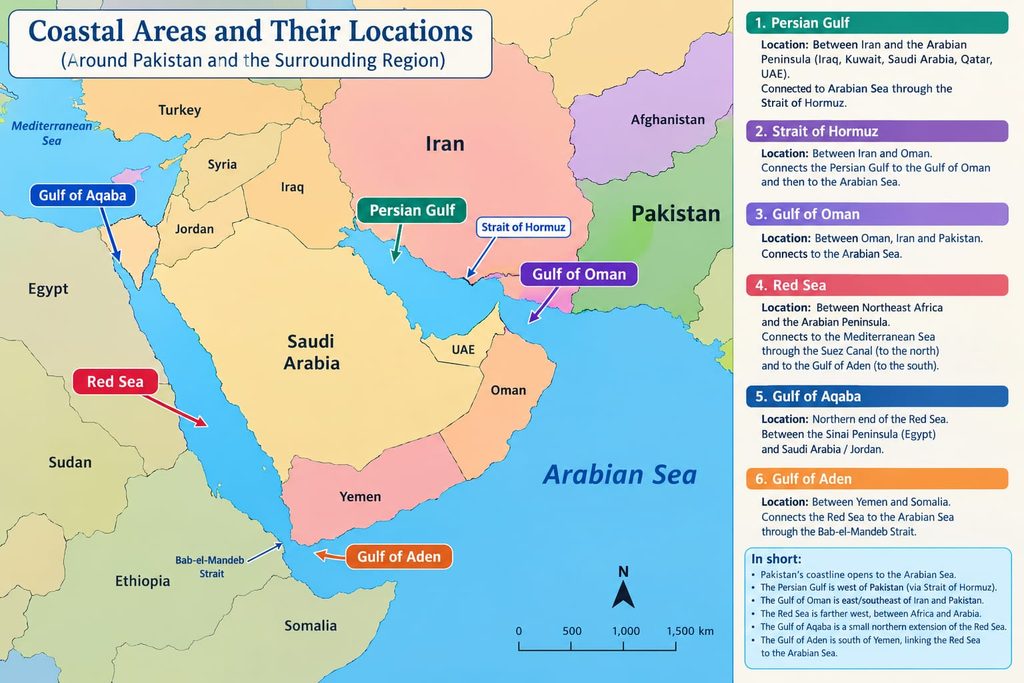
Waterways (choke points) were the most repeated subject across the speeches. Almost every leader condemned attacks on shipping. Almost every leader blamed someone else.
Prime Minister Sharif of Pakistan framed the waterways as public goods. He said, “They must remain open, connecting nations, not becoming choke points of confrontation.” He called Hormuz and Bab el-Mandeb “arteries of the global economy.” Then he added, “These waters must carry the promise of prosperity, not the perils of war.” Waterways are part of the international waters, under UN rules and known to be “global commons.“
Saudi Arabia’s Foreign Minister, Prince Faisal bin Farhan, went further. He rejected any “instrument of pressure, threat or harm.” He also demanded restoration of the pre-war situation “without the imposition of any fees or restrictions.”
Iran’s President Masoud Pezeshkian offered the counter-quote. He said, “We cannot let some have free access and gain their interest from a waterway.” His argument is simple. If others use the strait against Iran, Iran will not grant them easy passage. That is a security logic, not a trade logic.
Israel’s Prime Minister Benjamin Netanyahu added a third framing. He warned Europe about extremists who “are choking your waterways, your energy supply, your economic lifeline.” Notice the pattern. Each leader calls the sea a shared lifeline. Each defines the threat differently.
India joined from a trader’s angle. External Affairs Minister S. Jaishankar said, “The targeting of commercial shipping and seafarers, transiting international waterways, is simply unacceptable.” India and Liberia also launched a UN shipping-safety group. Jaishankar noted that ships carry about four-fifths of world trade.
Pakistan’s War Diplomacy- Mediator
Pakistan spoke as a waterway, a mediator and an aggrieved neighbour. Those roles pull in different directions.
On mediation, Prime Minister Sharif claimed a real part in the war’s diplomacy. Furthermore, he said, “Pakistan chose to act swiftly.” He added that “many historic steps were taken to bring an end to this serious conflict.” Sharif was referring to the Islamabad talks and the Islamabad memorandum of understanding. He also urged, “the voice for diplomacy must echo even louder and stronger.”
Yet Pakistan is not neutral in every direction. Sharif spoke of a defence pact among Saudi Arabia, Türkiye and Pakistan. He said, “This alliance is not directed against any country.” Iran, Israel and India may read that sentence differently. Israeli President Netanyahu repeatedly emphasizes the phrase “we have no other choice” throughout his speech.
Netanyahu’s Aggression and Solidarity
He first introduces the phrase through the personal story of his brother, Yoni Netanyahu, who reportedly said, “We’re going to win. We have no other choice.” Netanyahu then repeats the same expression when discussing October 7, Israel’s military response, and the broader conflict. He concludes his speech with the same phrase, creating a rhetorical link between past threats, present conflict, and Israel’s future.
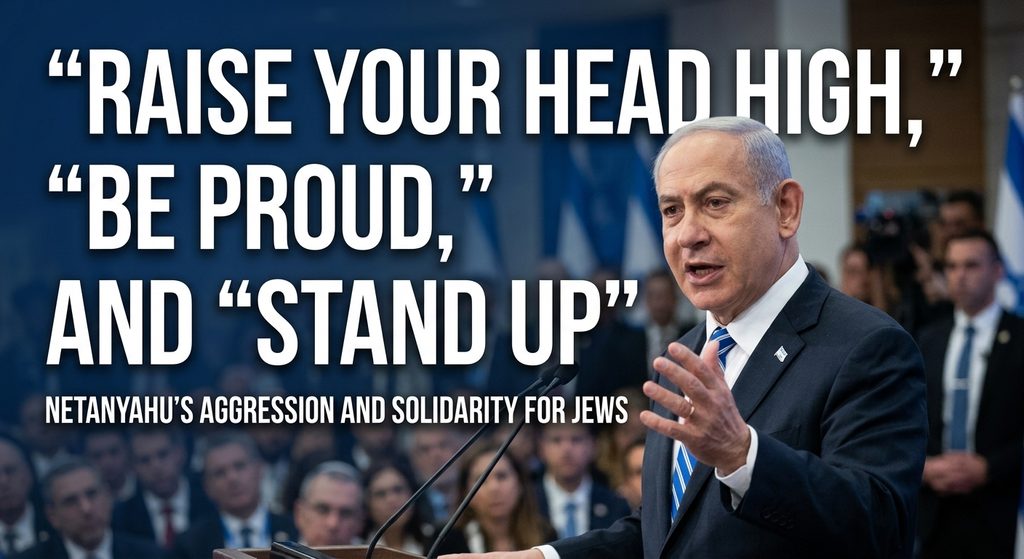
The speech also shifts from the state of Israel to the broader Jewish community. Netanyahu directly addresses “Jews around the world” and calls on them to “raise your head high,” “be proud,” and “stand up.” He then connects Jewish identity with collective security and the responsibility to defend Israel. This rhetorical shift can be understood as an attempt to strengthen collective identity and solidarity among Jewish audiences beyond Israel’s territorial boundaries.
War, Diplomacy and the Threat of Annihilation
The speeches split sharply on how this war should end.
President Donald Trump offered two paths in one breath. He asked, “Or do I annihilate the Islamic Republic and do it quickly?” Later he said, “But I believe we’ll make a deal right after the election because it doesn’t make sense for them not to.” A deal and an annihilation threat cannot both be the plan. One is bargaining. The other is coercion.
Iran replied with its own mix of defiance and dialogue. President Pezeshkian said, “We are ready for dialogue and diplomacy and negotiations without accepting the language of force.” On nuclear policy, he said, “no nuclear weapons and no limitations to peaceful nuclear technology.”
Prime Minister Netanyahu went further than Washington’s deal talk. He said, “Their murderous regime will be toppled by its lies, by its corruption, by its cruelty.” That is a regime-change hope, not a bargaining position. It sits awkwardly beside a negotiated settlement.
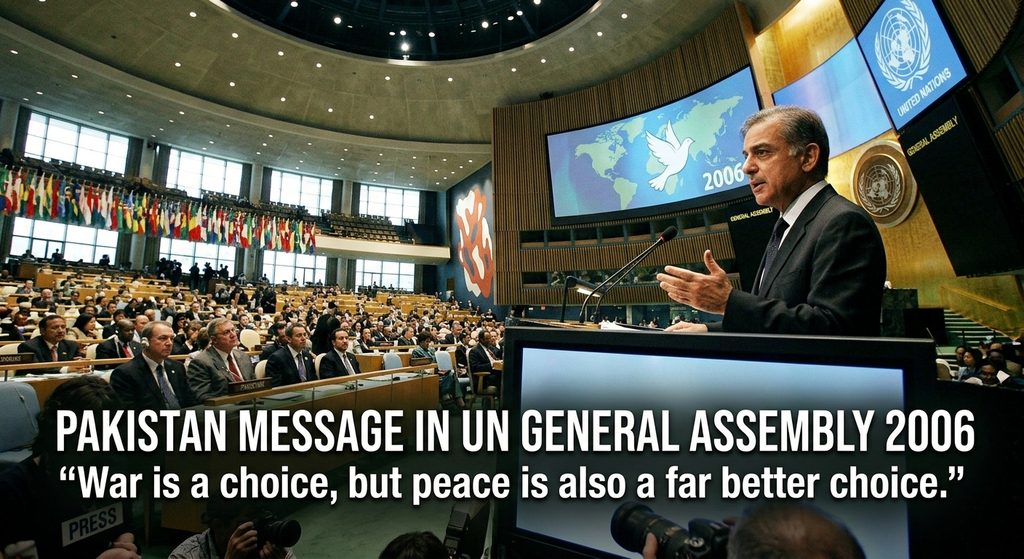
Pakistan tried to occupy the middle. Prime Minister Sharif said, “War is a choice, but peace is also a far better choice.” He also said, “We have chosen dialogue over confrontation.”
Here is our critical reading. The three war parties want different endings. Washington wants a deal on its terms. Israel hints at regime collapse. Iran wants recognition and security. Mediators can bridge tone. They cannot bridge incompatible goals.
Some claims also need care. President Trump said, “All 159 ships of their Navy are now lying at the bottom of the sea.” We could not verify that figure independently. Casualty figures in wartime also deserve official cross-checking.
On economics, Sharif linked security to development. He said, “Development must receive the same urgency as security.” He also pressed for “timely debt relief, affordable long-term financing, and a stronger voice in global financial institutions.” Pakistan paid heavily for its own security choices. Sharif said, “Pakistan sacrificed almost 100,000 precious lives and suffered economic losses exceeding $150 billion dollars.”
Gaza: War of Wits
No topic produced a starker clash than Gaza. Pakistan and Israel used the same word for opposite conclusions.
Prime Minister Sharif spoke of “Israel’s genocidal agenda which continues unabated.” Prime Minister Netanyahu answered directly. He said, “Israel didn’t commit genocide. Israel prevented genocide.” Iran added its own charge, calling Gaza “a symbol of the failure of international mechanisms to prevent civilian suffering.”
Courts and independent investigators must do that. What we can say is that both governments speak to domestic and allied audiences. Neither speech tries to persuade the other side.
Energy Security and World
Energy security means different things depending on where you stand.
Saudi Arabia defines it as supply resilience. Prince Faisal said, “The stability of this vital region is directly linked to global energy security.” He credited infrastructure: “The East West pipeline together with its petroleum reserves outside the region also contributed to mitigating the effects of those disruptions.”
The United States defines it as escorted flow and low prices. President Trump said “more oil is flowing than at any point since the start of the war.” He also promised that “oil prices will come plummeting down, even lower than they were at the start of the conflict.” Those are forecasts, not facts.
Iran defines it as sovereignty. President Pezeshkian said, “We seek energy for progress.” He tied peaceful nuclear technology to electricity, medicine, and food security.
Israel defines it as a civilizational threat to Europe’s supply. That is the “choking your waterways” line quoted above.
Now the counter-quotes on climate. Prince Faisal said, “energy security and climate action are mutually reinforcing objectives.” President Trump answered differently. He said, “There is no global government and while I’m president there will be no global taxes.” The two positions can coexist in speeches. They collide in shipping regulation and carbon pricing.
Pakistan added the import-dependent view. Sharif said, “Pakistan contributes less than 1% of global emissions yet repeatedly bears the horrific consequences of climate change.” The country buys much of its fuel abroad. So the oil price and the climate bill both hurt.
Who Gains from Conflict
Conflict rarely benefits everyone. It rewards those with alternative routes, stored reserves and naval reach. Saudi Arabia cited its pipeline. The United States cited its naval escorts. Both are advantages of geography and power.
Consider the Venezuela deal. President Trump said, “We signed the largest oil deal in history, covering 65 billion barrels of oil.” He also said, “To the victor belong the spoils.” Critics will read that as a resource motive. Supporters will read it as supply diversification. Both readings need evidence beyond a speech.
One claim stands out. He said, “When you add the United States and Venezuela together, we have more than 60% of the oil in the world.” Published reserve tables that we know of do not support that share. Please verify it before repeating it.
Import-dependent countries carry the bill. Jaishankar described a Global South squeezed by a “4F crisis” of food, fuel, fertiliser and finance. Costs land on the states with the least say.
South Asian duel played out
Prime Minister Sharif said, “Rivers should nourish nations, not divide them.” He also said, “Water must never be weaponized.” Then he warned, “any attempt to stop, impede or divert Pakistan’s share of the waters will be treated as an act of war.” The first lines invite cooperation. The last one issues a threat. All three came within minutes.
On Kashmir, Sharif was blunt: “Kashmir has and always will be Pakistan’s jugular vein.”
India replied the next day. Jaishankar said, “Yesterday, a serial practitioner of terrorism misrepresented facts before this assembly.” He did not name Pakistan in that line, but the target was clear from context. He also said, “Friendship and goodwill cannot co-exist with terrorism.”
Sharif also thanked Washington. He praised “President Donald Trump’s resolute and visionary leadership” for averting a wider war. President Trump then told the hall that Pakistan’s leader credited him with “saving 30 million lives.” Sharif’s own speech spoke of “hundreds of millions of lives in South Asia.” The two numbers differ widely. India has historically opposed outside mediation, so expect that credit to stay contested.
Mutual Interest: Where the Speeches Quietly Agree
| Shared interest | Who said it |
| Open sea lanes | Pakistan, Saudi Arabia, India, United States |
| Stable energy flows | Saudi Arabia, United States, Pakistan |
| Talks over force | Pakistan, Iran, Saudi Arabia |
| Fair burden on developing states | Pakistan, India |
Iran itself offered a mutual-interest line. President Pezeshkian said, “Either we will build it together or we will have to live under insecurity together.” He also said, “Iran does not see her neighbors as security rivals.” Saudi Arabia, which cites “flagrant Iranian attacks,” would dispute that claim. Yet the sentence shows where a deal might start.
Pakistan offered a similar test of sincerity. Sharif said, “We will restore trust when rivers become lifelines of cooperation, not fault lines of conflict.”
Accumulative Analysis
As an analyst, I suggest three possible ways. This is our judgment, not a forecast from any leader.
- Managed de-escalation. Islamabad-style channels and a post-election US deal reduce attacks. Shipping normalises slowly.
- Armed stalemate. Economic isolation meets strait pressure. Oil stays volatile. Importers keep paying.
- Wider spillover. Red Sea attacks and South Asian tensions merge into a larger crisis.
Pakistan’s Prime Minister offered the closing test himself. He said, “we live at a dangerous moment, but our future is certainly not predetermined.”
The 2026 speeches reveal one uncomfortable truth. Everyone praises peace, and everyone defines it as winning. The sea lanes, the oil price and the shared rivers are where that gap will be tested. Leaders may not agree on justice and peace but they may still agree on trade and global economic prosperity.
Author
Dr. Muhammad Rehman is a policy analyst focused on global governance, energy policy, and Public-Private Partnership (PPP) mechanisms across sectoral development projects. He writes for Global Policies Analysis, examining how supranational institutions and policy frameworks shape development outcomes worldwide.
About the Author


dont you think netanyahu was just so confident bcz he knows everyone is scared of him or whole system !
The deeper issue is not simply whether countries fear Netanyahu, but whether the international system can hold powerful leaders accountable. When leaders perceive that the costs of defying international pressure are limited, they may feel greater freedom to pursue their policies.
I think this blog is very knowledge full for bachelors students of media, IR or political science students as it is in an easy language and the speeches are accurately analysed and explained in a very accurate and precise manner. The author has done an incredible job
Thanks
If every country wants peace , why do international conflicts continue?
Because countries often want peace on their own terms, prioritising security, power, and national interests over compromise. The real contradiction is that nations speak the language of peace while pursuing strategies that can perpetuate conflict.
Everyone speaks about peace, but the real question is who is willing to act for it. Trust is built through actions, not promises.
Absolutely. Peace requires more than diplomatic rhetoric; it demands consistent action, mutual accountability, and respect for international law. Trust is not earned by promising peace, but by demonstrating it through actions.
Why do you think America has so easily said that it can annihilate islamic republic and if he should do it quickly on an international platform ? Isnt this wrong on so many levels when a lot of muslim countries are members of UN
And i also have an another question how can Israel say that it hasn’t committed any genocide on an international platform ? And what is there to be proud of when they have killed so many Palestinians and have made them suffer so much isn’t this shameful for a country or a prime minister
America’s threat to annihilate Iran reflects how powerful states can use military dominance and coercive diplomacy, but such threats raise serious questions about the UN Charter, sovereignty, and international peace.
Similarly, Israel’s denial of genocide is a contested legal position, not a final judgment; regardless of political rhetoric, civilian suffering demands accountability, respect for international law, and genuine efforts to achieve peace.
Pakistan’s power sector crisis requires structural reforms, transparent governance and sustainable energy policies. Without addressing circular debt and capacity payments affordable electricity and long-term economic growth will remain a challenge.
The blog mentions India in the context of Pakistan being accused of using terrorism. However, it should also have addressed the contrasting narratives presented by the United States and Iran. In his speech at the United Nations General Assembly, US President Donald Trump described Iran as the world’s leading state sponsor of terrorism. In response, Iranian President Masoud Pezeshkian rejected this characterization, arguing that Iran itself was a victim of terrorism and accusing the United States and Israel of attacks against his country. He defended Iran’s actions as self-defence against external aggression. Including both speeches would have provided a more balanced analysis of how terrorism is defined and used as a political narrative by different countries, rather than presenting only one perspective. It would also have strengthened the blog by examining how governments use the term “terrorism” to justify their own policies while challenging the legitimacy of their opponents’ actions.
Thank you for this valuable suggestion. I agree that including the contrasting US and Iranian narratives would strengthen the analysis. I will address how both governments frame terrorism to justify their policies and challenge the legitimacy of their opponents’ actions.
Peace cannot be selective; international principles must apply equally to all nations.
I agree. Lasting peace requires consistent application of international law and principles to all states, regardless of their power, political alliances, or strategic interests.
A very insightful analysis of the gap between diplomatic rhetoric and political reality. The real challenge for the international community is not simply to call for peace and trust, but to demonstrate them through consistent actions, respect for international law, and meaningful dialogue. Energy security, safe international waterways, and shared economic interests should serve as foundations for cooperation rather than instruments of political pressure. Ultimately, lasting peace cannot be achieved when every nation defines victory at the expense of others. It requires mutual accountability, genuine diplomacy, and a fairer international system that also protects the interests of developing countries.
Thank you for the thoughtful assessment. I agree that the central challenge is the gap between diplomatic rhetoric and political practice. The article highlights this gap by comparing the positions expressed by Pakistan, Iran, the United States, Israel, Saudi Arabia, and India on peace, diplomacy, energy security, and international waterways. I have also emphasized that open waterways, stable energy supplies, and shared economic interests can provide areas of common interest despite broader political disagreements. At the same time, the article recognizes that lasting stability requires dialogue, accountability, respect for international law, and greater consideration of the economic vulnerabilities of developing countries. These points reinforce the article’s central argument that restoring trust requires practical cooperation rather than diplomatic statements alone.
Yes, Netanyahu is right when he says, “We have no choice. We are going to win.”
When a power knows that the nation, religion, or group it is fighting against has connections and support from people around the world, it understands that its opponents are not entirely alone. Yet, those who hold power often build their strength on the basis of their military, political, and economic dominance. They know that others fear their power and that many countries hesitate to support those standing against them, whether emotionally, politically, or religiously.
That is why making such a statement is easy for a power that appears so overwhelmingly strong. It speaks with confidence because it believes its dominance is enough to guarantee victory. But this confidence is nothing more than the intoxication of power.
And the blame lies with us—with me and our nation—because we ourselves are not united. Instead of putting our faith in Allah’s commands and standing together, we have become too dependent on worldly powers and material strength.
When we fail to unite under the guidance of Allah, we make it easier for even the most powerful forces in the world to threaten us, challenge us, and act against us.
That is why, for a powerful figure like Netanyahu, making such statements and acting with such confidence is not difficult at all. The real tragedy is not merely the strength of our opponents, but our own disunity.
Yes, I understand the point you are making. The argument is not simply that Netanyahu is militarily powerful, but that his confidence is partly enabled by perceived deterrence, political dominance, and the disunity of those opposing him.
A powerful message highlighting the importance of global peace trust and energy security The world needs cooperation not conflict. 🌍
Very informative and helpful
All leaders said they want to restore trust but they all defined peace differently so can shared interests like keeping sea lanes open (Strait of Hormuz) and stable oil prices actually bring trust back when countries don’t agree on equality
Trust between countries cannot be built through speeches alone; it requires honest actions, reliable evidence, and meaningful cooperation.
If all these countries agree that peace, open waterways, and energy security are essential for global prosperity, what concrete steps can they take to rebuild trust and resolve their differences, particularly over Iran, Gaza, Kashmir, and regional security.
Very informative